No-Cook Chickpea Salad That Eats Like a Meal
Table of Contents
Introduction
Did you know that 68% of people skip lunch because they don’t have time to prepare something nutritious? Whether you’re juggling work deadlines, managing household chaos, or simply craving a meal that doesn’t require cooking, a no-cook chickpea salad might just become your new favorite solution. This isn’t just any salad—it’s a satisfying, protein-packed meal that comes together in minutes and tastes even better the next day.
A no-cook chickpea salad transforms humble pantry staples into something extraordinary. Chickpeas deliver approximately 15 grams of protein per cooked cup, making this vegetarian meal prep option comparable to many meat-based dishes. Combined with fresh vegetables, tangy feta, and a bright vinaigrette, this easy chickpea salad recipe delivers restaurant-quality flavor without the restaurant price tag or extensive prep work.
What makes this Mediterranean chickpea salad particularly appealing is its versatility. Meal prep enthusiasts love it because it stays fresh for days. Quick lunch ideas often fall flat, but this high protein salad maintains its texture and taste throughout the week. Whether you’re vegetarian, vegan (with simple modifications), or simply looking for a quick 10 minute salad that feels substantial, this recipe adapts beautifully to your needs.
Ingredients List
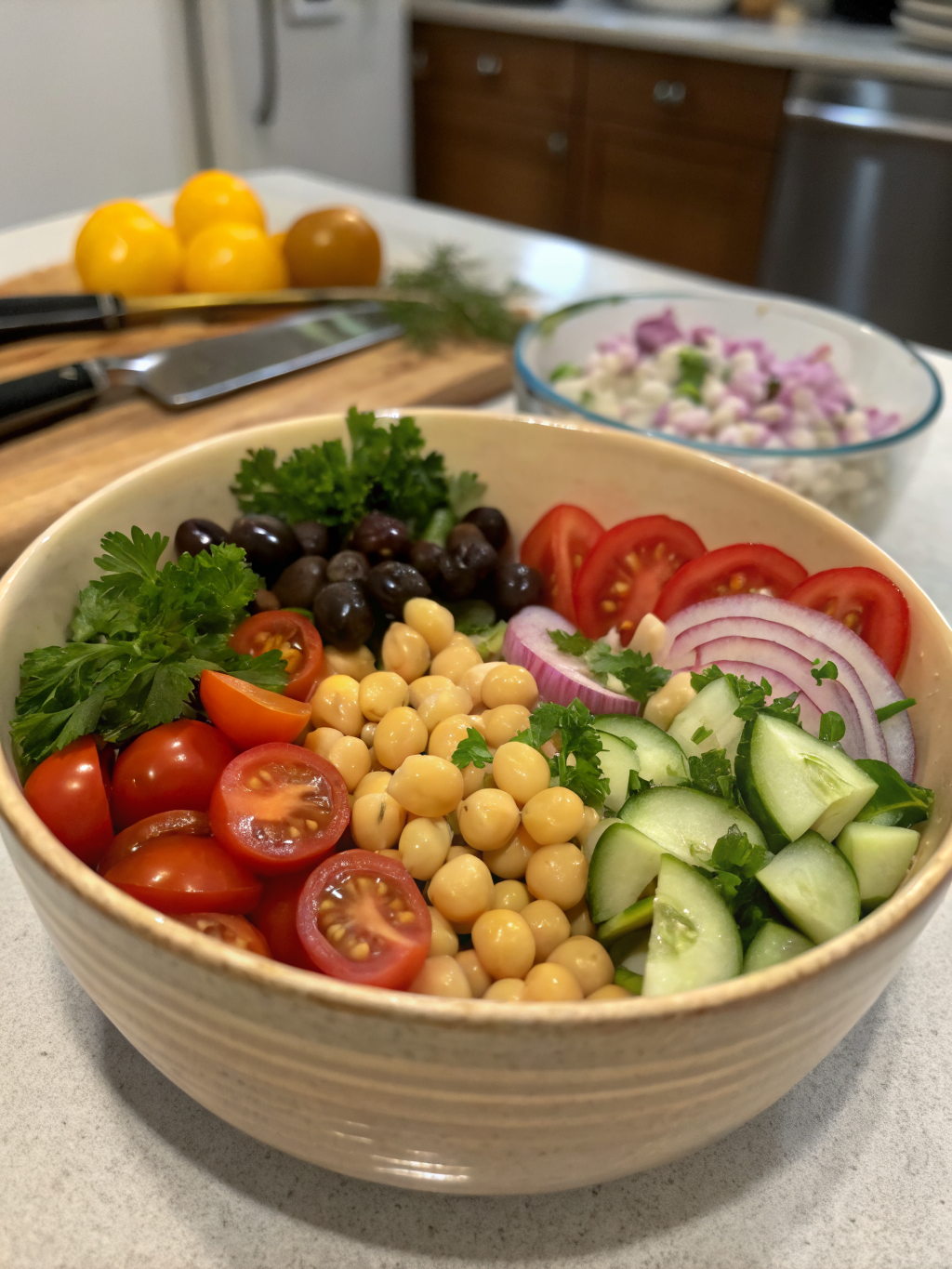
- 2 cans (15 oz each) chickpeas, drained and rinsed until water runs clear
- 1 cup cherry tomatoes, halved for maximum juiciness and visual appeal
- 1 cucumber, diced into bite-sized pieces with refreshing crunch
- 1/2 red onion, finely minced to provide sharp, peppery notes
- 1 cup crumbled feta cheese (or dairy-free alternative)
- 1/2 cup Kalamata olives, pitted and halved for briny complexity
- 1/4 cup fresh parsley, chopped to add herbaceous brightness
- 2 tablespoons fresh lemon juice, freshly squeezed for maximum acidity and flavor
- 3 tablespoons extra-virgin olive oil, high-quality for rich, fruity undertones
- 1 teaspoon dried oregano, or 1 tablespoon fresh oregano for Mediterranean authenticity
- Salt and black pepper to taste, adjusted based on feta saltiness
- Optional: 1/4 teaspoon red pepper flakes for subtle heat and depth
Substitution Suggestions: Replace feta with chickpea tofu for a vegan version. Swap Kalamata olives with green olives or sun-dried tomatoes. Use lime juice instead of lemon for a different citrus profile. Add roasted red peppers from a jar for extra sweetness without additional prep time.
Timing
Prep Time: 10 minutes – This includes rinsing chickpeas, chopping vegetables, and measuring ingredients. Unlike recipes requiring actual cooking, your prep work here is purely assembly-based.
Cook Time: 0 minutes – There’s literally nothing to cook, which is the entire appeal of this no-cook chickpea salad recipe.
Total Time: 10 minutes – To put this in perspective, this is faster than waiting for delivery, picking up takeout, or even making most canned soups.
Chill Time (Optional but Recommended): 15 minutes – Allowing your salad to rest in the refrigerator lets flavors meld beautifully, though it’s absolutely edible immediately.
Step-by-Step Instructions
Step 1: Prepare Your Chickpeas
Open your canned chickpeas and drain them thoroughly. Rinse under cool running water for at least 30 seconds, gently rubbing them between your fingers. This removes excess sodium and the starchy liquid that can make your salad mushy. Pat them dry with paper towels—dry chickpeas integrate better with your vinaigrette and maintain a firmer texture throughout storage.
Step 2: Chop Your Vegetables with Intention
Dice your cucumber into uniform 1/4-inch pieces—consistency matters for even flavor distribution and pleasant mouthfeel. Halve your cherry tomatoes lengthwise rather than crosswise; this orientation prevents excessive juice release that can make your salad watery. Mince your red onion finely; thinly sliced onion can be overwhelming, but minced pieces distribute peppery flavor evenly. Roughly chop your fresh parsley just before assembly to preserve its vibrant color and fresh aroma.
Step 3: Combine Your Base Ingredients
In a large mixing bowl, combine your chickpeas, cucumber, tomatoes, red onion, feta cheese, and Kalamata olives. The order matters less than ensuring even distribution. Use a gentle folding motion rather than aggressive stirring to keep feta chunks intact and chickpeas whole. This is why this Mediterranean chickpea salad maintains its textural integrity.
Step 4: Create Your Vinaigrette
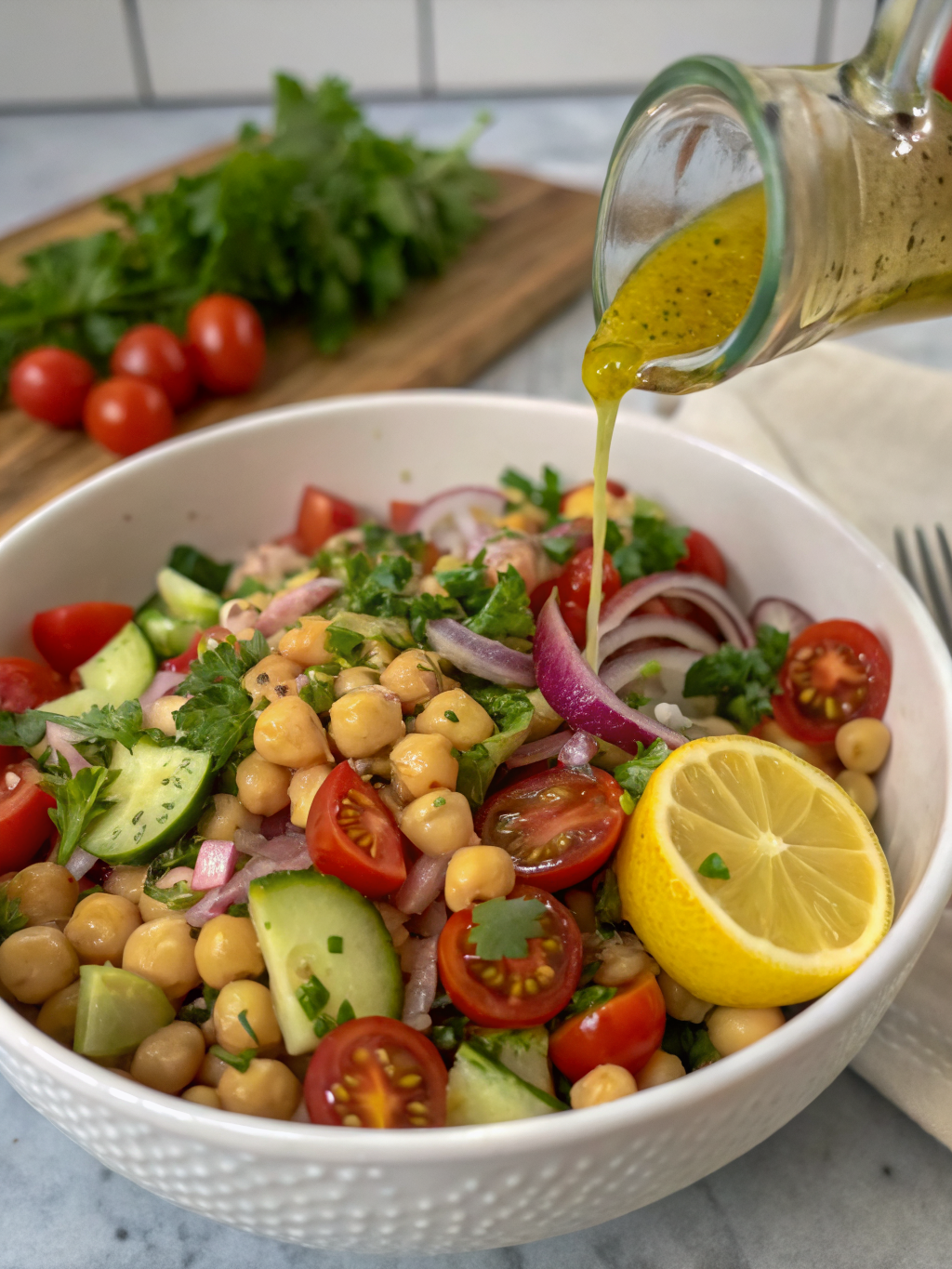
In a small bowl or mason jar, whisk together your lemon juice, olive oil, oregano, salt, pepper, and optional red pepper flakes. The ratio of 2:3 (acid to oil) creates a balanced vinaigrette that coats ingredients without making the salad greasy. If using a mason jar, simply screw the lid on and shake vigorously for 20 seconds—this emulsifies the vinaigrette beautifully and makes cleanup easier.
Step 5: Combine and Season to Perfection
Pour your vinaigrette over the chickpea mixture and fold gently until everything is evenly coated. Taste a spoonful and adjust seasonings—remember that feta adds saltiness, so taste before adding additional salt. This final tasting ensures your easy chickpea salad recipe tastes exactly how you prefer it. Add fresh parsley at this stage for maximum flavor and visual appeal.
Step 6: Chill and Serve
Transfer to the refrigerator for at least 15 minutes before serving, though immediate consumption is absolutely acceptable. For meal prep purposes, divide into containers and refrigerate up to five days. This 10 minute salad actually improves as it sits, with flavors becoming more pronounced and cohesive.
Nutritional Information
Per serving (makes 4 servings):
- Calories: 285
- Total Fat: 14g (Saturated Fat: 4g)
- Cholesterol: 12mg
- Sodium: 520mg
- Total Carbohydrates: 32g (Dietary Fiber: 8g, Sugars: 4g)
- Protein: 11g
- Vitamin A: 8% DV
- Vitamin C: 22% DV
- Iron: 15% DV
- Calcium: 18% DV
This high protein salad provides substantial fiber for digestive health and satiety. The combination of plant-based protein from chickpeas and dairy protein from feta creates a complete amino acid profile, making this vegetarian meal prep option genuinely satisfying for several hours.
Healthier Alternatives for the Recipe
Lower-Sodium Version: Rinse canned chickpeas twice and reduce feta to 3/4 cup. Use no-salt-added olives if available, or rinse standard olives before adding.
Vegan Mediterranean Chickpea Salad: Replace feta with chickpea tofu, extra-firm tofu, or cashew cheese. The salad maintains its creamy texture and tangy notes while remaining completely plant-based.
Lower-Fat Alternative: Reduce olive oil to 2 tablespoons and use low-fat feta or omit cheese entirely. Add extra lemon juice and herbs to compensate for reduced richness.
Keto-Friendly Adaptation: While chickpeas are higher in carbs, you can reduce the quantity to 1 can and add more vegetables and feta. Include nuts like pine nuts or walnuts for healthy fats.
Gluten-Free Consideration: This recipe is naturally gluten-free, making it ideal for those with celiac disease or gluten sensitivity. Simply verify that your feta and olives are certified gluten-free if that’s a concern.
Serving Suggestions
Enjoy this no-cook chickpea salad on its own as a complete meal, providing sustained energy from fiber and protein. Serve it alongside warm pita bread or crispy flatbread for textural contrast and additional sustenance. Layer it over fresh greens as a deconstructed salad for added volume without extra calories. Use it as a filling for hollowed tomatoes or cucumber boats for an elegant appetizer presentation. Stuff it into whole grain wraps with fresh spinach for portable quick lunch ideas. Serve chilled as part of a Mediterranean mezze board alongside hummus, olives, and artisan cheeses.
Common Mistakes to Avoid
Not Rinsing Chickpeas Thoroughly: Excess starch creates a gummy texture and murky appearance. Rinse until water runs completely clear for optimal results.
Chopping Tomatoes Too Far in Advance: Diced tomatoes release liquid over time, creating a watery salad. Chop them no more than 30 minutes before serving.
Over-Mincing Red Onion: Tiny pieces release more sulfur compounds, creating an overly sharp, unpleasant flavor. Aim for consistent, visible pieces.
Using Wilted or Low-Quality Produce: Since nothing is cooked, vegetable quality directly impacts the final dish. Choose firm cucumbers, vibrant tomatoes, and fresh herbs.
Insufficient Seasoning: Without cooking to concentrate flavors, you need generous seasoning from the start. Taste as you go and don’t under-salt.
Adding Dressing Too Far in Advance: Vinaigrette makes vegetables release liquid over time. For optimal texture, dress 30 minutes to 2 hours before eating.
Storing Tips for the Recipe
Refrigerator Storage: Keep your prepared no-cook chickpea salad in an airtight container for up to five days. The flavors actually improve after 24 hours as components absorb the vinaigrette.
Make-Ahead Strategy: Prepare vegetables and chickpeas separately, storing them in different containers. Mix the vinaigrette in a small container. Combine everything 2 hours before eating for maximum freshness while still benefiting from flavor melding.
Freezing Not Recommended: The texture of fresh vegetables deteriorates significantly when frozen. Chickpeas freeze adequately but aren’t necessary since canned chickpeas store indefinitely at room temperature.
Travel-Friendly Packing: Transport dressing separately and combine just before eating to prevent sogginess during commutes. Use sturdy containers with secure lids to prevent spillage.
Refreshing Stored Salad: If your salad seems dry after a few days, add a splash of additional lemon juice and olive oil. If it’s too wet, drain excess liquid and add fresh vegetables to restore textural balance.
Conclusion
This no-cook chickpea salad proves that quick lunch ideas don’t require compromise on nutrition or flavor. With zero cooking involved, genuine ingredient quality shines through in every bite. Whether you’re exploring easy chickpea salad recipes for the first time or adding this version to your meal prep rotation, you’re making a choice that benefits your body, your schedule, and your taste buds.
The beauty of this vegetarian meal prep option lies in its simplicity and adaptability. Make it exactly as written, or customize it with your preferred vegetables, herbs, and proteins. What matters most is that you’re creating something nourishing, delicious, and achievable even on your busiest days.
Ready to transform your lunch routine? Make this no-cook chickpea salad this week and notice how much better you feel with real, whole food nutrition. Share your favorite customizations in the comments below—we’d love to hear how you make this recipe your own. Don’t forget to save this page for easy reference during your next meal prep session!
FAQs
Q: Can I make this salad without feta cheese?
A: Absolutely! Simply omit it or replace with dairy-free alternatives like chickpea tofu, cashew cheese, or nutritional yeast for savory depth. The salad remains delicious and substantial.
Q: How long does this Mediterranean chickpea salad actually last?
A: Properly stored in an airtight container, it remains fresh and delicious for up to five days. The flavor actually intensifies after 24 hours.
Q: Can I make this without canned chickpeas?
A: Yes, but you’d need to cook dried chickpeas beforehand (6-8 hours soaking plus 45 minutes cooking). Since the entire appeal is “no-cook,” canned is genuinely your best option for this recipe.
Q: Is this high protein salad suitable for weight loss?
A: Yes! With approximately 11 grams of protein and 8 grams of fiber per serving, this easy chickpea salad recipe promotes satiety and sustained energy, supporting weight management goals.
Q: What’s the best way to pack this for work?
A: Transport dressing separately and combine just before eating. Use a container with a secure, leak-proof lid to prevent spills in your bag or lunch box.
Q: Can I add other vegetables to this no-cook chickpea salad?
A: Definitely! Bell peppers, radishes, artichoke hearts, roasted beets, and avocado all work beautifully. Just avoid overly watery vegetables like zucchini or eggplant.