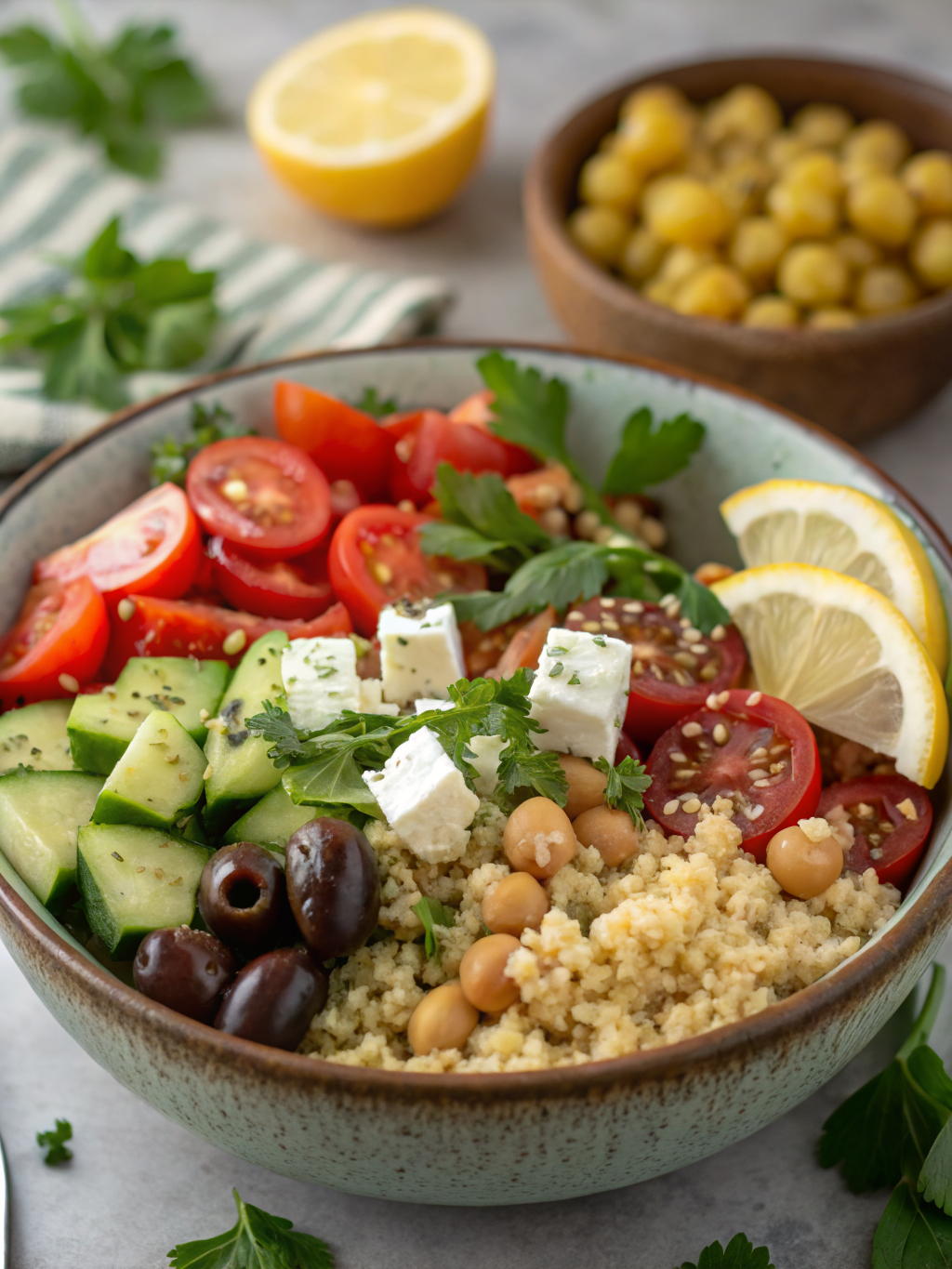
15-Minute Mediterranean Bowls with Easy Hummus Dressing
Table of Contents
Introduction
Did you know that 73% of busy professionals struggle to find time for nutritious meals during the workweek? If you’re among them, Mediterranean bowls might be your answer to quick, satisfying eating. These vibrant, nutrient-packed bowls combine the best of Mediterranean cuisine—fresh vegetables, protein-rich chickpeas, creamy feta, and a silky hummus dressing—all ready in just 15 minutes. Whether you’re meal prepping for the week or preparing a weeknight dinner, Mediterranean bowls deliver restaurant-quality nutrition without the restaurant price tag or time commitment. This guide will walk you through creating a quick Mediterranean bowl recipe that transforms simple ingredients into a restaurant-worthy dish your whole family will love.
Ingredients List
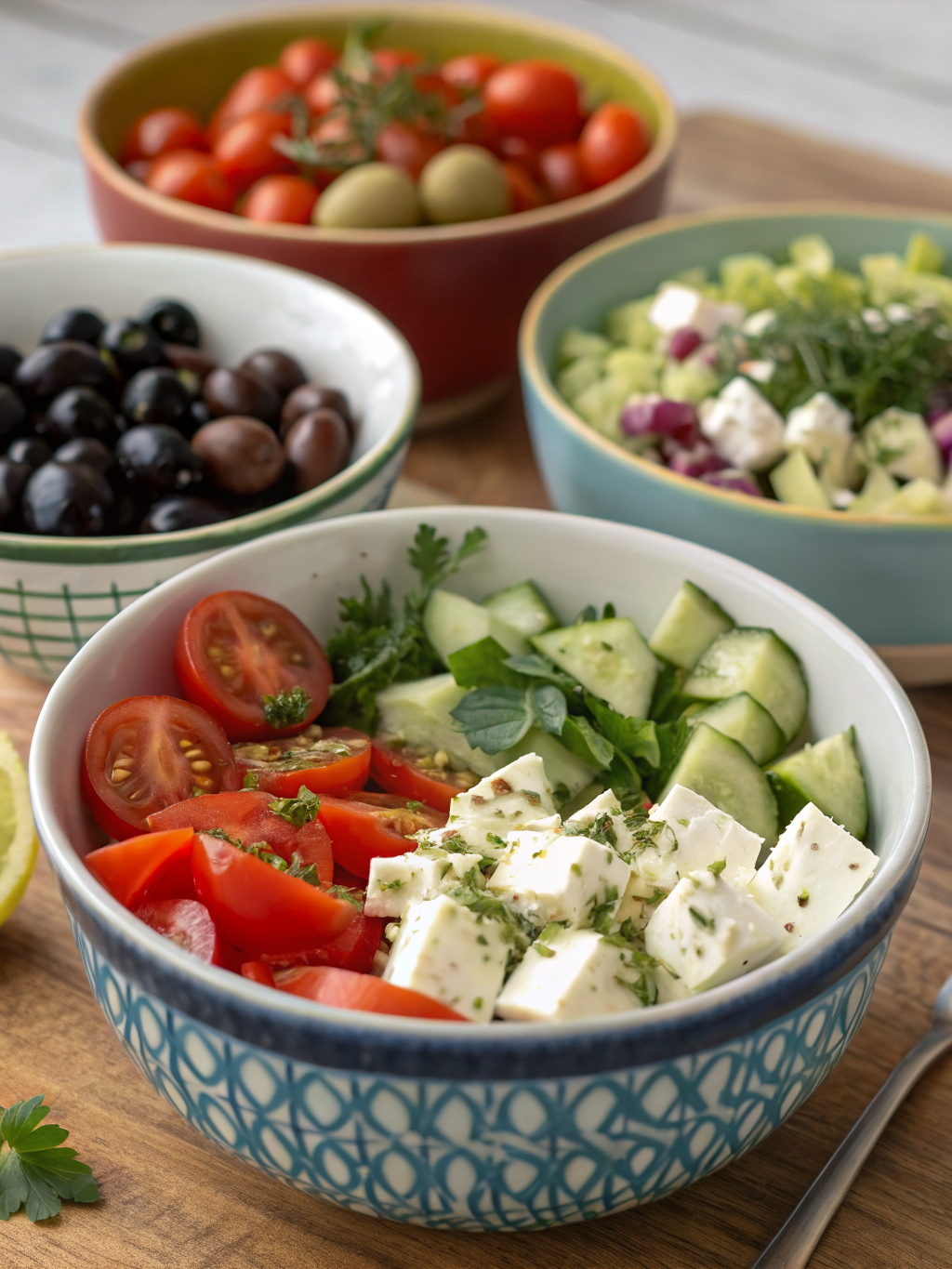
Here’s everything you need to create these delicious easy chickpea bowls:
- 2 cups cooked quinoa (or brown rice, farro, or couscous)—fluffy base with a slightly nutty flavor
- 1 can (15 oz) chickpeas, drained and rinsed—creamy, protein-packed legumes
- 1 cup cherry tomatoes, halved—bright, juicy bursts of sweetness
- 1 cucumber, diced—crisp and refreshing crunch
- 1/2 red onion, thinly sliced—peppery depth and texture
- 1 cup baby spinach or mixed greens—nutrient-dense leafy base
- 3/4 cup crumbled feta cheese—tangy, salty accent
- 1/4 cup Kalamata olives, pitted—briny umami element
- 1/2 cup roasted red peppers (jarred is fine)—sweet, smoky notes
Hummus Dressing Ingredients:
- 3/4 cup hummus (store-bought or homemade)—creamy base
- 3 tablespoons tahini (optional but recommended)—rich, nutty undertone
- 2 tablespoons fresh lemon juice—bright acidity
- 1 garlic clove, minced—aromatic punch
- 2-3 tablespoons water—to reach desired consistency
- 1/2 teaspoon ground cumin—warm spice note
- Salt and black pepper to taste
Substitution Suggestions: No hummus? Greek yogurt mixed with tahini works beautifully. Prefer grains? Try farro, millet, or even couscous instead of quinoa. Can’t have feta? Crumbled goat cheese, ricotta salata, or dairy-free cashew cheese are excellent alternatives for creating your Mediterranean quinoa bowl.
Timing
Prep Time: 10 minutes—This covers washing, chopping, and gathering all ingredients. Most of the vegetables are diced or sliced with a sharp knife, making this process quick and straightforward.
Cook Time: 5 minutes—Primarily whisking together the hummus dressing. If using pre-cooked quinoa (which we recommend for meal prep bowls), no additional cooking is needed.
Total Time: 15 minutes—From start to finished bowl on your table. To put this in perspective, this is faster than most food delivery services and significantly cheaper.
Context: Most people spend 30-45 minutes on weeknight meals. These healthy lunch bowls cut that time in half while delivering superior nutrition and satisfaction compared to takeout options.
Step-by-Step Instructions
Step 1: Prepare Your Base Grains
If using fresh quinoa, cook according to package directions (typically 15 minutes). However, for our 15-minute timeline, use pre-cooked quinoa from the microwave packets or prepare it during meal prep on Sunday. Distribute 1/2 cup cooked quinoa into each of four bowls, creating an even base layer that will absorb the hummus dressing flavors.
Step 2: Create Your Hummus Dressing
In a small mixing bowl, combine 3/4 cup hummus, tahini, fresh lemon juice, minced garlic, and ground cumin. Whisk thoroughly until well combined. Gradually add water, one tablespoon at a time, until you achieve a pourable consistency—similar to ranch dressing. This typically requires 2-3 tablespoons. Taste and adjust seasonings with additional salt and pepper as needed. A thick dressing clings to vegetables better than a thin one.
Step 3: Assemble Your Vegetable Components
While the dressing sets, prepare all vegetables. Halve cherry tomatoes, dice cucumber into 1/4-inch pieces, thinly slice red onion (soak in ice water for 2 minutes if you prefer milder onion flavor), and measure out your spinach and other components. Organization at this stage means faster assembly and a more professional-looking final product.
Step 4: Combine and Layer Vegetables
Atop each quinoa base, layer ingredients strategically: spinach first (it wilts slightly from the warm grain), followed by cucumber, cherry tomatoes, red onion, and roasted red peppers. This layering creates visual appeal and ensures each bite contains multiple textures and flavors. Don’t mix everything together—the presentation matters for satisfaction.
Step 5: Add Protein and Cheese
Distribute the rinsed chickpeas evenly across each bowl—these provide the plant-based protein that transforms this salad into a complete meal containing approximately 15 grams of protein per serving. Top with crumbled feta cheese and Kalamata olives. These salty components complement the creamy hummus perfectly.
Step 6: Drizzle and Serve
Pour approximately 3 tablespoons of hummus dressing over each bowl. Drizzle it across the top rather than concentrating it in one area. Serve immediately, or store components separately for meal prep and combine just before eating for optimal texture and freshness.
Nutritional Information
Each serving of these vegetarian Mediterranean recipes provides:
- Calories: 385 per bowl
- Protein: 15 grams—excellent for sustained energy and satiety
- Carbohydrates: 48 grams—complex carbs from quinoa and vegetables
- Dietary Fiber: 12 grams—supports digestive health and fullness
- Fat: 14 grams—heart-healthy fats from olive oil in hummus and olives
- Calcium: 220 mg—from feta cheese
- Iron: 5.2 mg—plant-based iron from chickpeas and spinach
- Potassium: 680 mg—important for heart health and muscle function
- Sodium: 620 mg—primarily from feta and olives
These bowls are naturally gluten-free (using quinoa), high in fiber, and provide excellent macronutrient balance for stable energy throughout your afternoon.
Healthier Alternatives for the Recipe
Lower Calorie Option: Replace half the hummus dressing with Greek yogurt and increase lemon juice for brightness. This reduces calories to approximately 320 per serving while maintaining creaminess and protein content.
Higher Protein Version: Add grilled chicken breast, baked tofu, or hard-boiled eggs to boost protein to 25+ grams per serving. This creates an even more satiating meal perfect for post-workout nutrition.
Lower Sodium Choice: Use unsalted chickpeas, reduce feta to 1/2 cup, and replace Kalamata olives with raw almonds for crunch. This maintains texture and satisfaction while reducing sodium by approximately 200 mg per serving.
Vegan Adaptation: Omit feta and replace with nutritional yeast or cashew cheese. Use tahini-based dressing (heavier on tahini, lighter on hummus). Everything else remains naturally plant-based.
Low-Carb Alternative: Replace quinoa with cauliflower rice or zucchini noodles, increasing vegetables slightly. This reduces carbohydrates to approximately 22 grams while maintaining nutrient density.
Serving Suggestions
Serve these Mediterranean bowls as a standalone lunch, pairing with warm pita bread or flatbread on the side for scooping the hummus dressing. For dinner, complement with grilled fish or chicken for additional protein and heartiness.
Create a Mediterranean bowl bar for entertaining by setting out components separately and allowing guests to customize their combinations based on preferences. This works beautifully for family meal prep sessions or casual entertaining.
Pack these bowls for work lunches—keep dressing separate until eating to maintain vegetable crispness. The components stay fresh in the refrigerator for up to three days when stored properly.
Transform leftovers into Mediterranean wrap sandwiches using whole wheat tortillas, adding extra hummus and lettuce for structure.
Common Mistakes to Avoid
Mistake 1: Over-Dressing Too Early Adding hummus dressing immediately before storage causes vegetables to become soggy and loses their appealing crunch. Instead, drizzle dressing just before eating, or pack it separately if meal prepping.
Mistake 2: Using Low-Quality Hummus Store-bought hummus varies significantly in flavor. Taste-test before purchasing, or make your own—homemade hummus elevates these bowls substantially and takes only 10 minutes.
Mistake 3: Chopping Vegetables Too Large Inconsistent vegetable sizes create uneven bites and look unprofessional. Aim for uniform 1/4-inch dice for cucumber and consistent cherry tomato halves. This also ensures every bite contains all elements.
Mistake 4: Forgetting to Rinse Canned Chickpeas Rinsing removes excess sodium and starch, improving texture significantly. This simple step prevents mushiness and reduces sodium by approximately 200 mg per serving.
Mistake 5: Not Seasoning the Dressing Adequately Taste as you go! The hummus dressing should be flavorful enough to complement vegetables without additional seasoning at the table.
Storing Tips for the Recipe
Short-Term Storage (1-3 Days): Store components separately in airtight containers. Keep greens, vegetables, and grains in separate containers, with dressing in a small glass jar. This maintains optimal texture and prevents sogginess.
Best Practices for Meal Prep Bowls: Layer grains first in containers, followed by heartier vegetables (carrots, peppers, onions), then delicate ingredients (tomatoes, cucumber) on top. Place greens in a separate container and add immediately before eating.
Freezing Option: These bowls don’t freeze well due to vegetable texture changes. However, cooked quinoa freezes beautifully for up to three months, and hummus dressing freezes for one month.
Make-Ahead Advantage: Prepare hummus dressing up to five days ahead, storing in a glass container. Chop most vegetables two days prior, keeping them in separate airtight containers. This dramatically reduces weekday prep time.
Travel-Friendly Packing: For transportation, pack components in wide-mouth mason jars with dressing at the bottom, followed by grains and sturdy vegetables, finishing with greens on top. Shake vigorously before eating for even dressing distribution.
Conclusion
These 15-minute Mediterranean bowls prove that healthy eating doesn’t require hours in the kitchen or complicated techniques. By combining simple, whole ingredients with a creamy hummus dressing, you create meals that satisfy both nutritionally and deliciously. Whether you’re focused on weight management, energy optimization, or simply wanting nutritious weeknight dinners, these bowls deliver consistently.
The beauty of this easy chickpea bowls recipe lies in its flexibility—customize components based on seasonal availability, dietary preferences, and what you have on hand. Start making these this week and experience how meal prep can transform your relationship with food. Share your Mediterranean bowl creations in the comments below, and let us know your favorite ingredient combinations!
FAQs
Q: Can I make Mediterranean bowls ahead of time?
A: Yes! Store components separately for up to three days. Keep the hummus dressing in a separate container and combine just before eating to maintain vegetable crispness and optimal texture.
Q: What’s the best grain substitute for quinoa?
A: Brown rice, farro, couscous, or millet all work beautifully. Choose based on personal preference—each brings slightly different nutritional profiles and flavors to your meal prep bowls.
Q: Is this recipe naturally gluten-free?
A: Yes, when using quinoa or rice as your base grain, this recipe is naturally gluten-free. Always verify that purchased hummus, tahini, and other packaged ingredients are certified gluten-free if needed.
Q: How many servings does this recipe make?
A: This recipe serves four people as a substantial lunch or light dinner. Double the ingredients for larger groups or to have additional servings for meal prep throughout the week.
Q: Can I use frozen vegetables?
A: Frozen vegetables work for grains and some components, but use fresh vegetables for items eaten raw (cucumber, cherry tomatoes) to maintain the appealing crunch that makes these bowls special.
Q: What protein options work beyond chickpeas?
A: Grilled chicken breast, canned tuna, hard-boiled eggs, baked tofu, lentils, or white beans all complement Mediterranean flavors beautifully and increase protein content for more satiation.