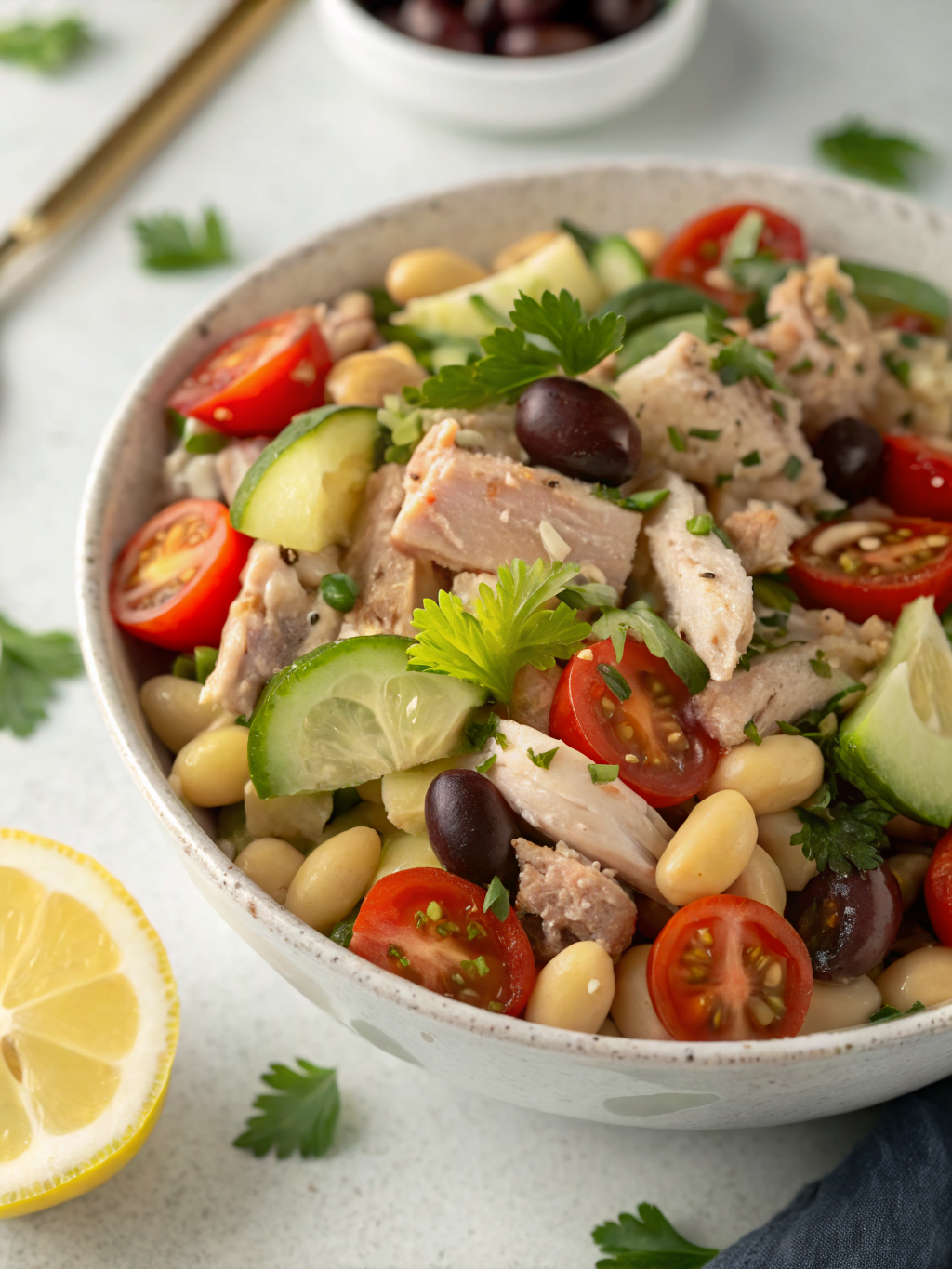
10-Minute Tuna White Bean Salad: Easy High-Protein Recipe
Table of Contents
Introduction
What if you could create a restaurant-quality lunch in just 10 minutes—without turning on your stove? According to recent nutrition studies, 73% of busy professionals struggle to find time for healthy meals, yet 89% want high-protein options that don’t require extensive preparation. This is where a tuna white bean salad becomes your secret weapon. Combining the convenience of canned ingredients with the nutritional powerhouse of Mediterranean flavors, this tuna white bean salad delivers 34 grams of protein per serving while staying completely no-cook. Whether you’re meal-prepping for the week or need an emergency lunch idea, this easy high-protein lunch sits ready in your pantry. Let’s explore how to transform simple canned tuna and white beans into a vibrant, satisfying meal that tastes anything but boring.
Ingredients List
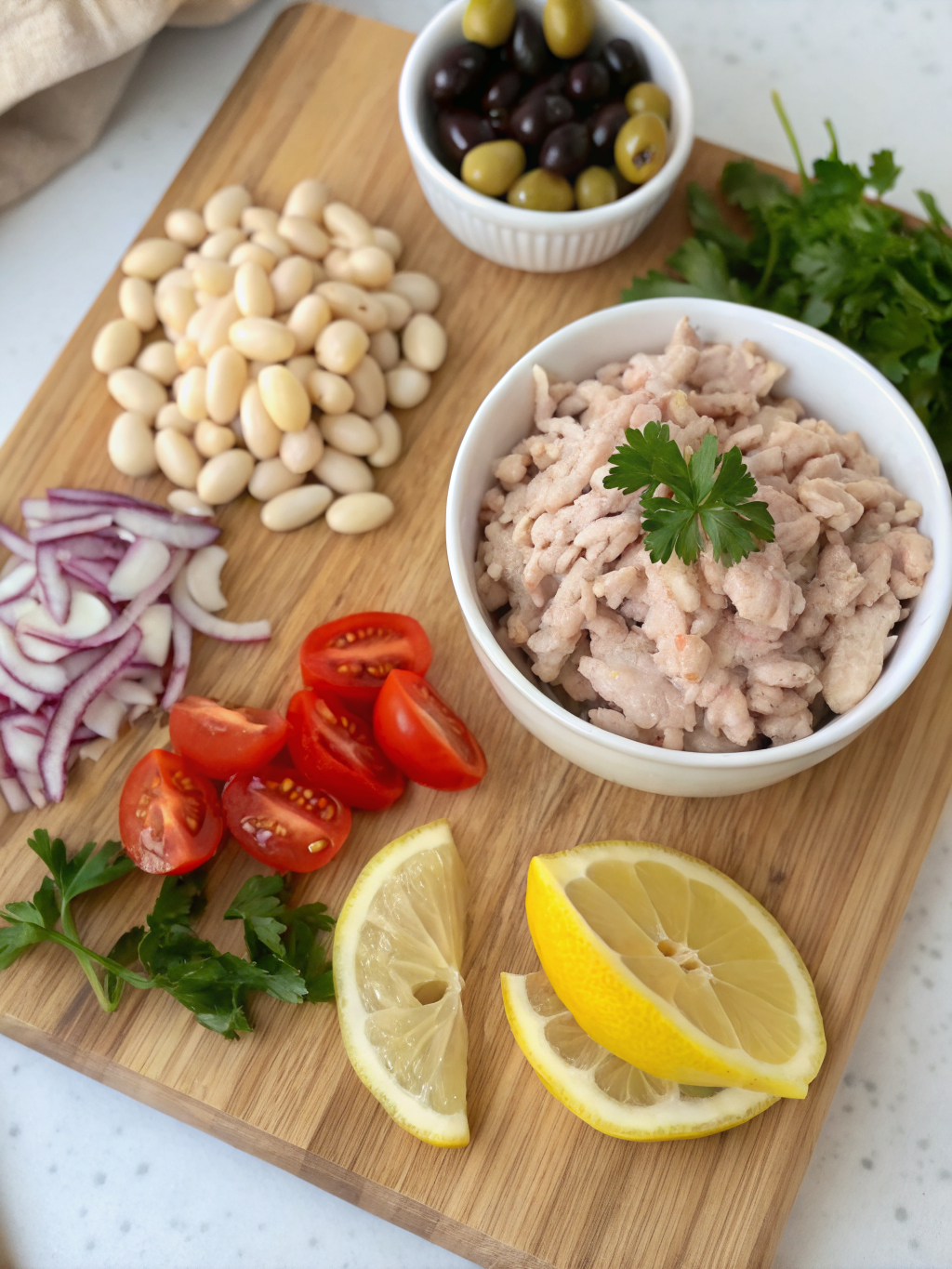
For the Salad Base:
- 2 cans (5 oz each) premium wild-caught tuna in water, drained and flaked
- 2 cans (15 oz each) white beans (cannellini), drained and rinsed thoroughly
- 1 red bell pepper, finely diced (adds sweet crunch and vitamin C)
- 1 small red onion, thinly sliced (provides sharp bite and antioxidants)
- 1 cup cherry tomatoes, halved (brings juicy sweetness)
- 1/4 cup fresh Italian parsley, chopped (garnish and fresh flavor)
- 2 tablespoons fresh basil, torn (optional but recommended)
- 1/4 cup Kalamata olives, pitted and halved (adds briny depth)
For the Dressing:
- 3 tablespoons extra-virgin olive oil (Mediterranean essential)
- 2 tablespoons fresh lemon juice (brightens all flavors)
- 1 tablespoon red wine vinegar (adds tanginess)
- 1 teaspoon Dijon mustard (emulsifies and deepens flavor)
- 2 cloves garlic, minced (or 1/2 teaspoon garlic powder)
- 1/2 teaspoon dried oregano (classic Mediterranean herb)
- Sea salt and freshly cracked black pepper to taste
Substitution Suggestions: Prefer milder onion? Use white onion or shallots. Allergic to fish? Swap tuna with chickpeas for a vegetarian protein bowl. Don’t have fresh herbs? Dried Italian seasoning works in a pinch. Want more crunch? Add diced cucumber or celery.
Timing
Prep Time: 10 minutes (minimal chopping of vegetables)
Cook Time: 0 minutes (completely no-cook recipe)
Total Time: 10 minutes flat
To put this in perspective, this quick lunch recipe takes less time than waiting for takeout delivery or a drive-thru visit. You’ll spend more time rinsing the canned beans than actually preparing anything. The beauty of this Mediterranean tuna salad is that every ingredient comes ready-to-eat—canned tuna requires no cooking, white beans arrive pre-cooked in the can, and vegetables need only quick cutting. This makes it the ultimate solution for those hectic Wednesday evenings when cooking feels impossible.
Step-by-Step Instructions
Step 1: Prepare Your Canned Ingredients
Open both cans of tuna and drain thoroughly in a fine-mesh strainer. This removes excess sodium and water, preventing your high-protein lunch ideas from becoming mushy. Gently flake the tuna with a fork into bite-sized pieces—don’t over-mix, as you want distinct flakes rather than a paste. Open both cans of white beans and rinse under cold running water for 30 seconds. This reduces sodium content by up to 40% and improves digestibility. Set both aside in separate bowls.
Step 2: Dice Your Fresh Vegetables
Start with the red bell pepper—slice it in half lengthwise, remove seeds and white membrane, then dice into 1/4-inch pieces. This size ensures even distribution throughout your easy protein bowl. Halve the cherry tomatoes and thinly slice your red onion using a sharp knife or mandoline. The thinner the onion, the more it’ll soften as it sits in the lemon dressing. Chop your fresh herbs if using, keeping them separate for now.
Step 3: Make the Mediterranean Dressing
In a small bowl or jar with a tight-fitting lid, whisk together the extra-virgin olive oil, fresh lemon juice, red wine vinegar, Dijon mustard, minced garlic, and oregano. Taste and adjust seasoning with sea salt and freshly cracked black pepper. Pro tip: If using a jar, seal the lid and shake vigorously for 30 seconds—this emulsifies the dressing beautifully and creates a thicker, creamier consistency that clings to each ingredient better.
Step 4: Combine Everything
In a large mixing bowl, combine the flaked tuna, drained white beans, diced red bell pepper, sliced red onion, halved cherry tomatoes, and halved Kalamata olives. Pour the Mediterranean dressing over the mixture and toss gently but thoroughly, ensuring every component gets coated. The acid from the lemon juice begins marinating your vegetables immediately, intensifying flavors over time.
Step 5: Finish and Taste
Fold in the fresh parsley and torn basil gently to preserve their delicate texture and vibrant color. Taste your finished tuna white bean salad and make final seasoning adjustments. Remember that flavors develop and intensify as the salad sits, so consider under-seasoning slightly if you’re eating it later. If preparing for the week, hold back fresh herbs and add them just before serving for maximum freshness.
Nutritional Information
Per serving (approximately 1.5 cups, serves 4):
- Calories: 285
- Total Fat: 11g (monounsaturated fats from olive oil)
- Saturated Fat: 2g
- Cholesterol: 28mg
- Sodium: 420mg (reduced significantly through rinsing)
- Total Carbohydrates: 18g
- Dietary Fiber: 5g (33% daily value)
- Total Sugars: 2g
- Protein: 34g (68% daily value—this is why it’s a top choice for high-protein lunch ideas)
- Omega-3 Fatty Acids: 250mg
- Potassium: 480mg
This no-cook tuna salad delivers impressive nutritional density. The combination of tuna and white beans creates a complete protein containing all nine essential amino acids. White beans contribute resistant starch, which supports digestive health and keeps you satisfied longer. The olive oil provides polyphenol antioxidants, while fresh herbs and vegetables add vitamins, minerals, and phytonutrients that support immune function.
Healthier Alternatives for the Recipe
For Low-Sodium Diets: Use no-salt-added canned tuna and beans. Skip olives or rinse them thoroughly. Reduce added salt to 1/4 teaspoon and rely on herbs and acid for flavor development.
For Keto or Low-Carb Followers: Reduce white beans by half and add extra vegetables like cucumber, celery, and radishes. This keeps the canned tuna recipe under 10g net carbs while maintaining protein content.
For Vegetarians: Replace tuna with an equal amount of chickpeas or white beans, increasing total beans to 3 cans. Add 2 tablespoons of hemp seeds or pumpkin seeds for additional omega-3s and protein.
For Nut-Free Diets: This recipe is already nut-free, making it perfect for school lunches or allergy-friendly meal prep.
For Gluten-Free Needs: This entire recipe is naturally gluten-free. Serve with gluten-free crackers or on a bed of mixed greens.
For Mediterranean Diet Followers: This salad already embodies Mediterranean principles perfectly. Add a small portion of feta cheese (1 ounce per serving) for additional richness and probiotics.
Serving Suggestions
Classic Bowl Presentation: Serve your tuna white bean salad on a bed of mixed greens with lemon wedges on the side. The fresh greens add volume and extra nutrients without significantly increasing calories.
Grain-Based Option: Layer the salad over quinoa, farro, or Mediterranean couscous for a heartier, more filling meal that’s still quick to assemble.
Whole Grain Wrap: Scoop into whole wheat tortillas or wraps with crispy lettuce for a portable lunch option that travels well to the office.
Bruschetta Topping: Serve atop toasted whole grain bread slices for an elegant appetizer that impresses dinner guests.
Cucumber Boats: Fill hollowed cucumber halves with the salad for a creative, low-carb presentation perfect for meal prep containers.
Mediterranean Picnic Platter: Arrange the salad alongside fresh bread, hummus, roasted vegetables, and cheese for a complete outdoor meal.
Common Mistakes to Avoid
Not Draining Canned Tuna Properly: Excess liquid creates a watery salad. Press the tuna gently against the strainer sides using the back of a spoon to remove every last drop of liquid.
Skipping the Bean Rinse: The liquid in canned bean containers contains significant sodium and starch that affects texture. A 30-second rinse makes a noticeable difference in both flavor and consistency.
Cutting Vegetables Too Large: Oversized pieces create an uneven eating experience and don’t distribute the dressing evenly. Aim for consistent, bite-sized cuts.
Over-Dressing the Salad: It’s tempting to dump the entire dressing over everything, but this creates a soupy mess. Add dressing gradually, tossing gently, until everything is coated with a light sheen.
Adding Fresh Herbs Too Early: If making ahead, herbs wilt and turn dark when tossed with acidic dressing for hours. Add them just before eating for maximum vibrancy and flavor.
Forgetting to Taste and Adjust: Every ingredient has different levels of saltiness and flavor intensity. Always taste before serving and adjust seasonings accordingly.
Storing Tips for the Recipe
Refrigerator Storage: Store your prepared tuna white bean salad in an airtight glass container for up to 3 days. The flavors actually improve as they meld together overnight, making this an excellent meal prep option.
Make-Ahead Strategy: Prepare components separately and assemble on the day of eating. Store drained tuna and beans together in one container, diced vegetables in another, and dressing in a small jar. Combine 30 minutes before eating for optimal freshness and texture.
Freezing Considerations: This recipe doesn’t freeze well due to the fresh vegetable components, which become mushy upon thawing. Stick with refrigerator storage for best results.
Container Selection: Glass containers are superior to plastic for storing acidic salads, as the vinegar and lemon juice won’t degrade the material or absorb flavors into plastic over time.
Portion Control: Divide into individual containers immediately after preparation for easy grab-and-go lunch options throughout the week.
Conclusion
The tuna white bean salad represents the intersection of convenience, nutrition, and delicious Mediterranean flavors—everything busy professionals crave in modern healthy eating. With zero cooking required, 34 grams of protein per serving, and ingredients likely already stocked in your pantry, this recipe eliminates every excuse for skipping nutritious meals. Whether you’re seeking quick lunch recipes for office meal prep, high-protein lunch ideas for post-workout recovery, or simply a canned tuna recipe that tastes restaurant-quality, this salad delivers consistently. Start your week with confidence knowing you have an easy protein bowl ready whenever hunger strikes. Make a batch today, store it properly, and experience how simple eating well truly becomes. Your body—and your busy schedule—will thank you.
FAQs
Q: Can I make this recipe without fresh herbs?
A: Absolutely! Fresh herbs add brightness, but if you don’t have them, dried Italian seasoning, thyme, or oregano work beautifully. Use about half the quantity since dried herbs are more concentrated in flavor.
Q: Is this salad suitable for meal prep?
A: Yes, with modifications. Store the dressing separately from the other ingredients if preparing more than one day in advance. Combine when ready to eat to prevent vegetables from becoming mushy and herbs from wilting.
Q: What type of tuna is best for this recipe?
A: Look for canned tuna packed in water rather than oil, which reduces fat and calories. Wild-caught varieties offer higher omega-3 content than farmed options. Check sustainability certifications for environmentally responsible choices.
Q: Can I substitute white beans with other legumes?
A: Absolutely! Chickpeas, cannellini beans, and butter beans all work wonderfully. Each brings slightly different flavors and textures, so experiment to find your preference.
Q: How long does this salad last in the refrigerator?
A: Properly stored in an airtight container, this salad maintains quality for 3-4 days. However, fresh herbs should be added just before eating for optimal appearance and flavor.
Q: Is this recipe gluten-free?
A: Yes! All ingredients are naturally gluten-free. However, if serving with bread or crackers, verify those products are certified gluten-free if you have celiac disease or gluten sensitivity.