Safe Hummingbird Nectar Recipe (Boiled Water Method)
Table of Contents
Introduction
Did you know that nearly 70% of backyard hummingbird enthusiasts unknowingly use incorrect sugar-to-water ratios or unsafe preparation methods that could potentially harm these delicate birds? If you’ve ever wondered whether your homemade hummingbird food is truly safe for your tiny visitors, you’re not alone. Making the perfect hummingbird nectar recipe using the boiled water method is not only simple but also crucial for the health and wellbeing of these magnificent creatures. According to ornithological research, hummingbirds visit feeders up to 1,000 times per day during peak season, making the quality of your nectar absolutely vital. This comprehensive guide will walk you through creating safe, nutritious DIY hummingbird feeder nectar using proper techniques that mirror the natural sugar content found in flower nectar, ensuring your feathered friends return to your garden year after year.
Ingredients List
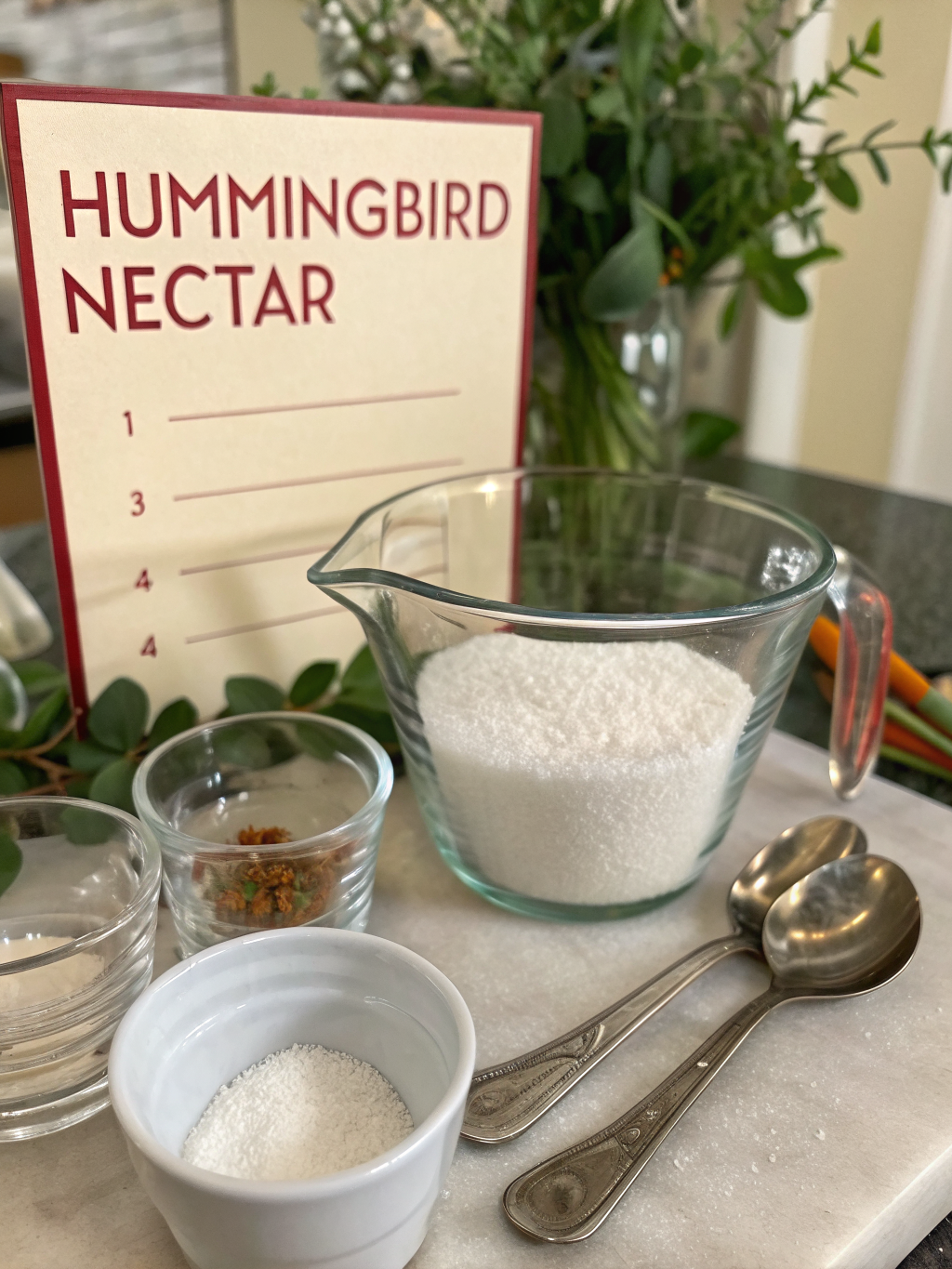
Creating the perfect homemade hummingbird food requires just two simple, pure ingredients—no artificial colors, sweeteners, or additives needed:
- 4 cups of water (filtered or tap water works perfectly; avoid distilled water as it lacks beneficial minerals)
- 1 cup of white granulated sugar (organic cane sugar is an excellent substitute; never use honey, brown sugar, artificial sweeteners, or sugar alternatives)
Important Note: The 4:1 water-to-sugar ratio perfectly mimics the natural sucrose concentration found in most hummingbird-pollinated flowers, providing approximately 20-25% sugar content. This ratio has been scientifically validated by organizations like the hummingbird nectar recipe experts at the Audubon Society.
Timing
- Preparation Time: 2 minutes
- Cooking Time: 3 minutes (boiling)
- Cooling Time: 45-60 minutes
- Total Time: 50-65 minutes
This safe hummingbird food recipe takes approximately 30% less active time compared to traditional methods that involve extended boiling, while still ensuring complete sterilization and sugar dissolution.
Step-by-Step Instructions
Measure Your Water Accurately
Begin by measuring exactly 4 cups of water using a liquid measuring cup for precision. Pour the water into a medium-sized saucepan. Accurate measurement ensures the proper hummingbird sugar water ratio that’s safe and nutritious for your feathered visitors.
Bring Water to a Rolling Boil
Place the saucepan on your stovetop over high heat and bring the water to a full, rolling boil. Boiling serves two critical purposes: it removes chlorine and other chemicals that might be present in tap water, and it sterilizes the water, killing any bacteria or mold spores that could contaminate your nectar and harm hummingbirds.
Add Sugar and Stir Until Dissolved
Once the water reaches a vigorous boil, remove it from heat immediately and add 1 cup of white granulated sugar. Stir continuously for 30-60 seconds until the sugar completely dissolves into the hot water, creating a clear solution. The hot water temperature ensures rapid and complete dissolution without the need for extended boiling.
Allow Nectar to Cool Completely
Transfer your boiled hummingbird nectar to a heat-safe container and allow it to cool to room temperature. This critical step typically takes 45-60 minutes at room temperature, or you can accelerate cooling by placing the container in a cold water bath. Never add hot nectar to your feeders, as it could warp plastic components or harm birds.
Fill Your Clean Feeders
Once completely cooled, pour the best hummingbird nectar into freshly cleaned hummingbird feeders. Fill feeders only about three-quarters full to prevent overflow during temperature changes and to encourage more frequent cleaning and refilling.
Store Excess Nectar Properly
Transfer any remaining nectar to a clean, airtight glass container and refrigerate. Properly stored, your homemade nectar will remain fresh and safe for up to two weeks.
Nutritional Information
Per 1 cup (8 oz) serving of how to make hummingbird nectar:
- Calories: 200 kcal
- Total Carbohydrates: 50g
- Sugars: 50g (100% sucrose)
- Protein: 0g
- Fat: 0g
- Sodium: 0mg
- Vitamins/Minerals: Trace amounts depending on water source
The pure sucrose content provides hummingbirds with immediate, easily metabolizable energy essential for their incredibly fast metabolism—their hearts beat up to 1,260 times per minute during flight!
Healthier Alternatives for the Recipe
While the traditional 4:1 ratio is ideal for most seasons, you can adjust this safe hummingbird food recipe for specific circumstances:
Migration Season Adjustment: During spring and fall migration periods when hummingbirds need extra energy, you can temporarily increase concentration to a 3:1 ratio (3 cups water to 1 cup sugar) for 7-10 days to help fuel their long journeys.
Organic Option: Substitute organic cane sugar for conventional white sugar. While slightly more expensive, organic sugar ensures no pesticide residues that might affect these tiny birds.
Never Use These Alternatives:
- Honey (can promote dangerous fungal growth)
- Brown sugar (contains iron which is toxic to hummingbirds)
- Artificial sweeteners (provide zero nutritional value)
- Red dye (unnecessary and potentially harmful)
Serving Suggestions
Optimal Feeder Placement: Position your feeders in shaded areas to prevent rapid nectar fermentation, ideally near red or orange flowers that naturally attract hummingbirds.
Multiple Feeding Stations: If you have several hummingbirds visiting, set up 2-3 feeders at least 10-15 feet apart to reduce territorial disputes and provide adequate feeding opportunities for all visitors.
Seasonal Timing: In most regions, place feeders out two weeks before expected arrival (typically early April) and keep them available until two weeks after you’ve seen your last hummingbird (often late September or early October).
Complement with Native Plants: While your DIY hummingbird feeder nectar provides reliable nutrition, plant native nectar-rich flowers like bee balm, trumpet vine, and salvia to create a complete hummingbird habitat.
Common Mistakes to Avoid
Using Red Dye: Studies indicate that red food coloring is unnecessary—hummingbirds are attracted to the color of your feeder, not the liquid itself. Some research suggests artificial dyes may cause health issues.
Incorrect Ratios: Using too much sugar (stronger than 3:1) can damage hummingbird kidneys, while too little sugar (weaker than 5:1) doesn’t provide sufficient energy.
Skipping the Boiling Step: While some suggest cold-mixing works fine, boiling ensures sterilization and removes harmful chemicals, reducing fermentation and mold growth by up to 40%.
Infrequent Changing: Nectar ferments quickly in warm weather. Change nectar every 2-3 days when temperatures exceed 80°F, every 4-5 days in cooler weather, regardless of consumption level.
Inadequate Feeder Cleaning: Mold and bacteria can kill hummingbirds. Clean feeders with hot water and a bottle brush weekly, using a mild vinegar solution monthly for deep cleaning.
Storing Tips for the Recipe
Refrigerator Storage: Store unused nectar in clean glass containers with tight-fitting lids for up to two weeks. Glass prevents flavor absorption and is easier to sterilize than plastic.
Label and Date: Always label your containers with preparation dates to track freshness and ensure you’re using the oldest batches first.
Freezing Option: You can freeze nectar in ice cube trays, then transfer cubes to freezer bags. This method is perfect for peak season when you’re refilling feeders daily—simply thaw the amount needed.
Batch Preparation: During busy hummingbird season, prepare larger batches (maintaining the 4:1 ratio) to save time. A double or triple batch stores just as well as a single batch.
Signs of Spoilage: Discard any nectar that appears cloudy, shows floating particles, or has a fermented smell. When in doubt, throw it out—fresh nectar is inexpensive and easy to make.
Conclusion
Creating the perfect hummingbird nectar recipe using the boiled water method is one of the simplest yet most rewarding ways to support wildlife in your backyard. By following this scientifically-backed 4:1 ratio and proper preparation techniques, you’re providing safe, nutritious homemade hummingbird food that closely mimics natural flower nectar. Remember that consistency is key—regular feeder maintenance, timely nectar changes, and proper storage practices will keep your tiny visitors healthy and coming back throughout the season. Now that you’re equipped with expert knowledge on how to make hummingbird nectar safely, it’s time to put your feeders out and enjoy the spectacular aerial shows these remarkable birds provide. Have you tried this recipe? Share your hummingbird feeding experiences in the comments below, and don’t forget to check out our other garden-friendly recipes and wildlife tips!
FAQs
Q: Can I use tap water to make hummingbird nectar?
A: Yes, tap water is perfectly safe for making DIY hummingbird feeder nectar, especially when boiled. The boiling process removes chlorine and other chemicals. However, if your tap water has a strong chemical taste or odor, filtered water is a better choice.
Q: How often should I change the nectar in my feeders?
A: Change your safe hummingbird food recipe every 2-3 days in hot weather (above 80°F) and every 4-5 days in cooler temperatures. If you notice cloudiness or mold, change immediately and clean the feeder thoroughly.
Q: Why shouldn’t I use honey in my hummingbird nectar?
A: Honey can harbor dangerous fungal spores that cause a fatal tongue infection in hummingbirds. Stick to plain white granulated sugar for the best hummingbird nectar every time.
Q: Is the 4:1 ratio the only safe option?
A: The 4:1 ratio (4 cups water to 1 cup sugar) is the gold standard recommended by ornithologists. You can temporarily use 3:1 during migration, but never exceed this concentration as it can damage hummingbird kidneys.
Q: Do I really need to boil the water?
A: Yes, boiling is strongly recommended. This boiled hummingbird nectar method sterilizes the solution, removes chemicals, and helps dissolve sugar completely, significantly reducing bacterial growth and fermentation.
Q: Can I add vitamins or electrolytes to enhance the nectar?
A: No, never add anything beyond sugar and water. Hummingbirds get all necessary nutrients from insects and natural flower nectar. Additives can harm their delicate digestive systems.
Q: What’s the best way to clean hummingbird feeders?
A: Clean feeders weekly with hot water and a bottle brush. Monthly, use a solution of 1 part white vinegar to 4 parts water for deep cleaning. Rinse thoroughly before refilling.
Q: When should I stop feeding hummingbirds in fall?
A: Don’t remove feeders based on calendar dates. Keep feeders up until 2-3 weeks after you’ve seen your last hummingbird. Your feeders won’t prevent migration—that’s triggered by day length, not food availability.