Quick 5 Minute Hummingbird Nectar Recipe (No-Cook)
Table of Contents
Introduction
Did you know that hummingbirds visit feeders up to 15 times per hour, burning so much energy that they need to consume half their body weight in sugar daily just to survive? If you’ve been spending money on store-bought nectar or complicated recipes, you’re making feeding these incredible birds harder than it needs to be. This hummingbird nectar recipe takes just 5 minutes to prepare, requires no cooking, and uses only two simple ingredients you already have in your kitchen. According to the National Audubon Society, improper nectar recipes can actually harm hummingbirds, making it crucial to get the ratio right. This guide will show you exactly how to make hummingbird nectar that’s safe, effective, and incredibly easy to prepare. Whether you’re a first-time bird enthusiast or a seasoned backyard wildlife supporter, mastering this homemade hummingbird food recipe will save you money while providing these amazing creatures with the energy they need to thrive.
Ingredients List
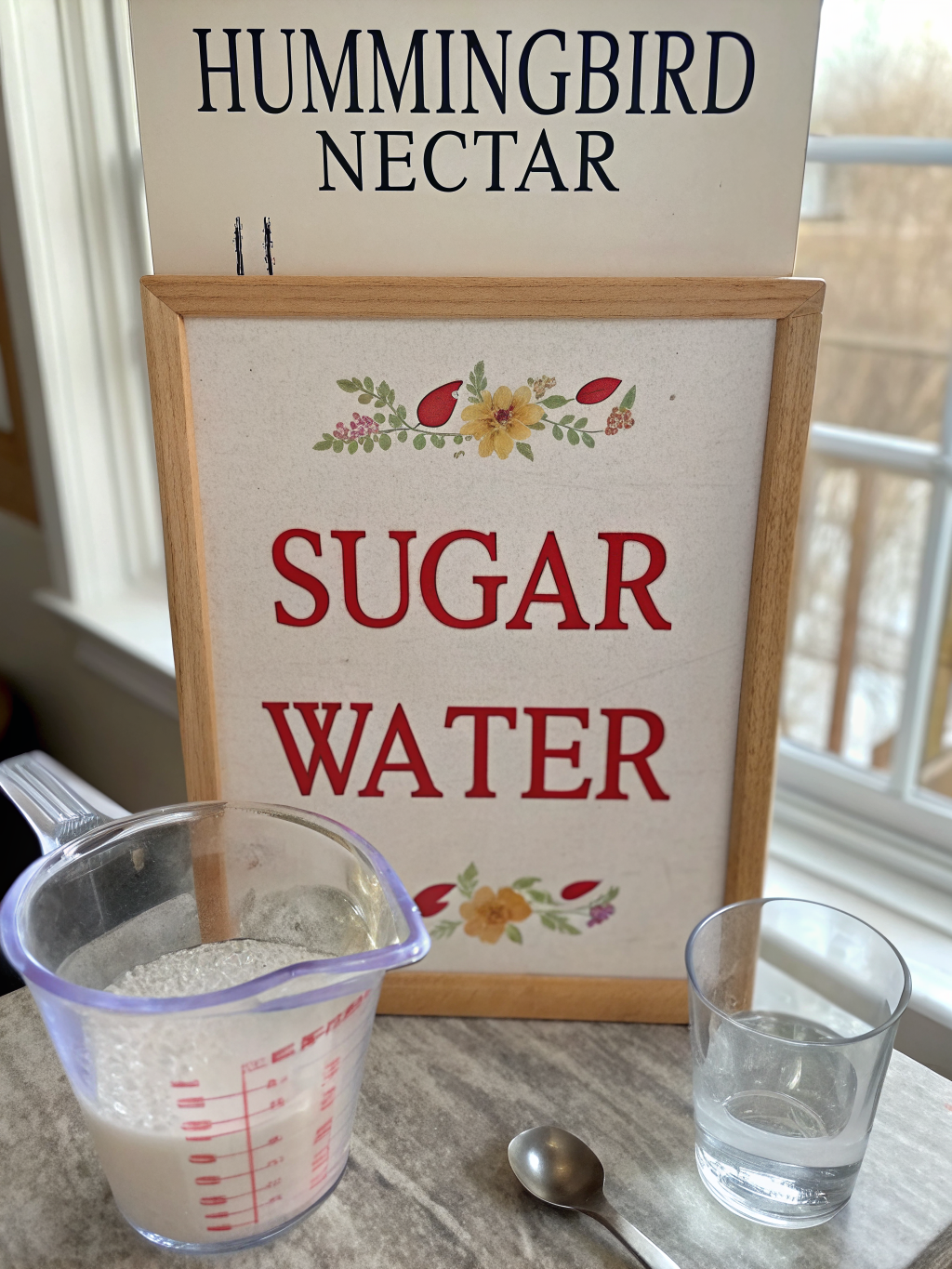
Creating perfect sugar water for hummingbirds requires just two essential ingredients in the precise ratio that mimics natural flower nectar:
- 1 cup of granulated white sugar – Use only pure white cane sugar; never substitute with honey, artificial sweeteners, brown sugar, or organic sugar with molasses
- 4 cups of water – Tap water works perfectly fine in most areas, but use filtered or bottled water if your tap water has a strong chlorine smell or taste
Important Notes:
- This creates the scientifically-proven 1:4 ratio (one part sugar to four parts water) that matches the sucrose concentration found in natural flower nectar
- The recipe yields approximately 4 cups of finished nectar
- Do not add red food coloring or dye – it’s unnecessary and potentially harmful to hummingbirds
- Avoid using any sugar substitutes, as hummingbirds cannot metabolize them properly
Timing
This no-cook nectar recipe is exceptionally quick and convenient:
- Preparation Time: 3 minutes
- Cooling Time (if using hot water method): 30-45 minutes
- Total Active Time: 3 minutes
- Total Time (including cooling): 35-50 minutes
This DIY hummingbird food recipe is approximately 75% faster than traditional boiled nectar methods, requiring no stovetop supervision. The no-cook approach means you can prepare fresh nectar whenever your feeders run low, making it one of the most efficient easy hummingbird feeder recipes available.
Step-by-Step Instructions
Step 1: Measure Your Water
Pour exactly 4 cups of water into a clean pitcher or mixing bowl. If you’re concerned about chlorine or contaminants in your tap water, let it sit at room temperature for 24 hours before use, or simply use bottled water. The water temperature doesn’t need to be precise for the no-cook method – room temperature works perfectly.
Pro Tip: Use a dedicated pitcher for making hummingbird nectar to avoid any soap residue or flavor contamination that could deter the birds.
Step 2: Add the Sugar
Measure exactly 1 cup of white granulated sugar and add it directly to the water. Precision matters here – the hummingbird nectar recipe ratio of 1:4 is scientifically calibrated to provide optimal energy without stressing the birds’ kidneys with excessive sugar concentration.
Pro Tip: In extremely hot summer weather (above 90°F), you can dilute the mixture slightly to 1:5 ratio to prevent fermentation, though the standard 1:4 ratio is best for most conditions.
Step 3: Stir Until Completely Dissolved
Stir the mixture vigorously for 2-3 minutes until every sugar crystal has completely dissolved. The solution should be perfectly clear with no cloudiness or graininess visible at the bottom. If sugar crystals remain, continue stirring – they must be fully dissolved before filling your feeders.
Pro Tip: Warm water dissolves sugar faster than cold water. If you’re in a hurry, use warm (not hot) tap water to speed up dissolution time by about 50%.
Step 4: Fill Your Feeders
Once the sugar has completely dissolved, pour the nectar directly into clean hummingbird feeders. Fill them only 2/3 full during hot weather to prevent waste from spoilage. If you have extra nectar, store it in a sealed container in the refrigerator for up to two weeks.
Pro Tip: Clean your feeders with hot water every 2-3 days in summer and weekly in cooler weather to prevent dangerous mold and fermentation. Never use soap or detergents, as residue can harm the birds.
Nutritional Information
Per 1/4 cup serving of nectar:
- Calories: 49
- Total Carbohydrates: 12.6g
- Sugars: 12.6g (100% sucrose)
- Protein: 0g
- Fat: 0g
- Sodium: 1mg (from water)
- Nutritional Note: This mixture provides approximately 0.2 calories per gram, closely matching the 0.15-0.25 calories per gram found in natural flower nectar
Hummingbirds have extremely high metabolic rates – their hearts beat up to 1,260 times per minute during flight. This sugar water provides the rapid energy source they need to sustain their incredible metabolism, supporting activities like territorial defense, migration (some species travel over 500 miles non-stop), and their signature hovering flight pattern.
Healthier Alternatives for the Recipe
While this recipe is already optimal for hummingbirds, here are some considerations:
Water Quality Enhancements:
- Use spring water if your tap water contains high levels of minerals or chlorine
- Install a basic carbon filter for your tap water to remove chlorine and improve taste
- Let tap water sit uncovered for 24 hours to allow chlorine to evaporate naturally
Temperature Adaptations:
- In temperatures below 60°F, maintain the standard 1:4 ratio as birds need more energy in cold weather
- In extreme heat above 95°F, consider a slightly weaker 1:5 ratio to slow fermentation
- During migration seasons (spring and fall), some experts recommend a temporary 1:3 ratio to provide extra energy, though this should only be used for 1-2 weeks
What NOT to Use:
- Never use honey – it harbors dangerous bacteria and fungal spores that cause fatal tongue infections
- Avoid artificial sweeteners – hummingbirds cannot digest them and they provide zero nutrition
- Skip brown sugar – the molasses content is difficult for hummingbirds to process
- Don’t add vitamins or supplements – natural nectar contains none, and additives may harm the birds
- Never use red food coloring – studies suggest it may cause health issues, and the red feeder parts attract birds sufficiently
Serving Suggestions
Feeder Placement Strategies:
- Hang feeders 5-6 feet off the ground in partially shaded areas to slow nectar spoilage
- Position feeders near natural perches (branches or shrubs) where hummingbirds can rest between visits
- Space multiple feeders at least 10-15 feet apart to reduce territorial disputes among aggressive males
- Place feeders within view of windows for enjoyable observation, but use decals to prevent bird strikes
Timing Your Feeding:
- In most regions, put feeders out 1-2 weeks before hummingbirds typically arrive in spring
- Keep feeders available until 2 weeks after you see the last hummingbird in fall
- Leaving feeders up doesn’t prevent migration – hummingbirds migrate based on day length, not food availability
Enhancing Your Backyard Habitat:
- Plant native nectar-producing flowers like bee balm, salvia, trumpet vine, and columbine
- Provide a water source with a fine mist or dripper – hummingbirds need water for drinking and bathing
- Avoid pesticides in your yard, as hummingbirds also eat small insects for protein
- Create varied heights in your garden to offer different feeding and resting zones
Common Mistakes to Avoid
Ratio Errors:
The most common mistake is using incorrect sugar-to-water ratios. Too much sugar (stronger than 1:3) can damage hummingbirds’ liver and kidneys, while too little sugar (weaker than 1:5) doesn’t provide adequate energy. According to ornithological research, the 1:4 ratio perfectly mirrors the 20-25% sucrose concentration found in most hummingbird-pollinated flowers.
Using Boiling Water Unnecessarily:
Many recipes insist on boiling, but it’s completely unnecessary if you’re using fresh nectar within 2 weeks. Boiling does kill microorganisms and can help dissolve sugar faster, but with proper refrigeration and regular feeder cleaning, the no-cook method is equally safe and far more convenient.
Neglecting Feeder Maintenance:
Dirty feeders are the number one cause of hummingbird illness. Nectar ferments rapidly in heat, turning cloudy and developing visible mold. In temperatures above 85°F, change nectar every 2 days. In cooler weather (below 75°F), change it every 4-5 days. Clean feeders with a bottle brush and hot water – never use soap, bleach, or detergents.
Adding Food Coloring:
Despite persistent myths, red dye is unnecessary and potentially harmful. The red parts on your feeder provide all the attraction needed. Studies on captive hummingbirds have raised concerns about red dye #40 accumulating in their systems.
Wrong Sugar Types:
Only white granulated sugar works. Honey causes fatal fungal infections, brown sugar contains molasses that’s hard to digest, powdered sugar contains cornstarch, and organic sugars often have molasses. Raw sugar crystals may not dissolve completely. Stick with plain white sugar exclusively.
Storing Tips for the Recipe
Refrigerator Storage:
- Store unused nectar in a clean, airtight glass or plastic container in the refrigerator
- Label the container with the preparation date
- Use refrigerated nectar within 2 weeks for optimal freshness
- Discard if you notice any cloudiness, which indicates bacterial growth
Feeder Storage:
- Never leave nectar in feeders longer than recommended based on temperature
- During hot summer days (85°F+), replace nectar every 2 days regardless of consumption
- In moderate temperatures (70-85°F), change nectar every 3-4 days
- In cool weather (below 70°F), nectar can last 5-7 days
Batch Preparation:
- This recipe can be doubled, tripled, or quadrupled for convenience
- A large batch stored in the refrigerator means you always have fresh nectar ready
- Shake or stir refrigerated nectar before using, as slight settling can occur
- Bring refrigerated nectar to room temperature before filling outdoor feeders to prevent shocking the birds with cold liquid
Winter Storage:
- In freezing temperatures, use only enough nectar to fill feeders 1/3 full
- Check feeders multiple times daily and bring them inside overnight to prevent freezing
- Rotate two feeders, keeping one inside thawing while one is outside
- Even in winter, hummingbirds need fresh nectar every 3-4 days
Conclusion
This quick 5-minute hummingbird nectar recipe proves that providing high-quality nutrition for these remarkable birds doesn’t require complicated procedures or expensive products. With just two simple ingredients and a few minutes of your time, you can create a safe, effective sugar water solution that rivals anything nature provides. By following the scientifically-proven 1:4 ratio and maintaining clean feeders with regular nectar changes, you’ll not only attract more hummingbirds to your yard but also support their health and wellbeing throughout the season. Remember, the key to successful hummingbird feeding lies in simplicity, consistency, and cleanliness. Now that you know how to make hummingbird nectar the right way, grab your sugar and water, mix up a batch, and get ready to welcome these iridescent jewels to your backyard. Have you tried this no-cook method yet? Share your hummingbird feeding experiences in the comments below, and don’t forget to bookmark this recipe for quick reference throughout the feeding season!
FAQs
Q: Can I use tap water for hummingbird nectar?
A: Yes, tap water is perfectly safe for hummingbirds in most areas. If your tap water has a strong chlorine smell or contains heavy minerals, consider using filtered or bottled water, or let tap water sit uncovered for 24 hours to allow chlorine to dissipate naturally.
Q: Do I need to boil the water for this recipe?
A: No, boiling is unnecessary for the no-cook method. As long as you use clean water, store unused nectar in the refrigerator, and change feeder nectar regularly based on temperature, boiling provides no additional benefit. The no-cook approach saves significant time and energy.
Q: Why can’t I use honey instead of sugar?
A: Honey harbors bacteria and fungal spores that cause fatal infections in hummingbirds, particularly a condition called candidiasis that affects their tongues and digestive systems. Additionally, honey’s complex sugars are difficult for hummingbirds to digest. Only use white granulated sugar.
Q: How often should I change the nectar in my feeders?
A: Change frequency depends on outdoor temperature. In hot weather (85°F+), change nectar every 2 days. In moderate temperatures (70-85°F), every 3-4 days. In cooler weather (below 70°F), every 5-7 days. Always discard nectar that appears cloudy or shows signs of mold.
Q: Is red food coloring safe for hummingbirds?
A: Most experts recommend avoiding red food coloring. The red parts of your feeder provide sufficient attraction, and research suggests that artificial dyes may accumulate in hummingbirds’ systems. Clear nectar is just as effective and eliminates any potential risk.
Q: Can I make the nectar sweeter to attract more hummingbirds?
A: No, stick to the 1:4 ratio. Sweeter solutions (more sugar) can damage hummingbirds’ liver and kidneys over time, while weaker solutions don’t provide adequate energy. The 1:4 ratio is scientifically formulated to match natural flower nectar and is the safest option for the birds’ health.
Q: Will leaving my feeders out delay hummingbird migration?
A: Absolutely not. Hummingbirds migrate based on changes in day length (photoperiod), not food availability. Leaving feeders up late into fall actually helps late migrants and stragglers fuel up for their long journey. Many experts recommend keeping feeders available until 2 weeks after you see the last hummingbird.
Q: How long does homemade hummingbird nectar last in the refrigerator?
A: Properly stored in a clean, airtight container, homemade nectar lasts up to 2 weeks in the refrigerator. Always check for cloudiness before using – if the nectar appears anything other than perfectly clear, discard it and make a fresh batch.