Easy Teriyaki Chicken Rice Bowls (25 Minutes!)
Easy Teriyaki Chicken Rice Bowls (25 Minutes!)
Introduction
Did you know that over 60% of home cooks abandon dinner plans because they believe delicious Asian-inspired meals take too long to prepare? If you've ever craved restaurant-quality teriyaki chicken rice bowls but settled for takeout instead, you're about to discover a game-changing solution. These teriyaki chicken rice bowls come together in just 25 minutes, proving that weeknight dinners can be both incredibly fast and remarkably flavorful. Whether you're a busy professional, a parent juggling multiple schedules, or simply someone who values their time without compromising on taste, this recipe delivers the perfect balance of convenience and culinary satisfaction. The sweet-savory glaze, tender chicken, and perfectly steamed rice create a harmonious meal that rivals anything you'd order from your favorite Asian restaurant—all from the comfort of your own kitchen.
Ingredients
For the Teriyaki Chicken:
- 1.5 lbs boneless, skinless chicken thighs (or chicken breasts for a leaner option)
- 1/3 cup soy sauce (low-sodium recommended)
- 3 tablespoons honey (or maple syrup for a refined sugar-free alternative)
- 2 tablespoons rice vinegar
- 1 tablespoon fresh ginger, grated (or 1 teaspoon ground ginger)
- 3 cloves garlic, minced
- 1 tablespoon cornstarch mixed with 2 tablespoons water
- 2 tablespoons sesame oil (or vegetable oil)
- 1 tablespoon sesame seeds for garnish
For the Rice Bowls:
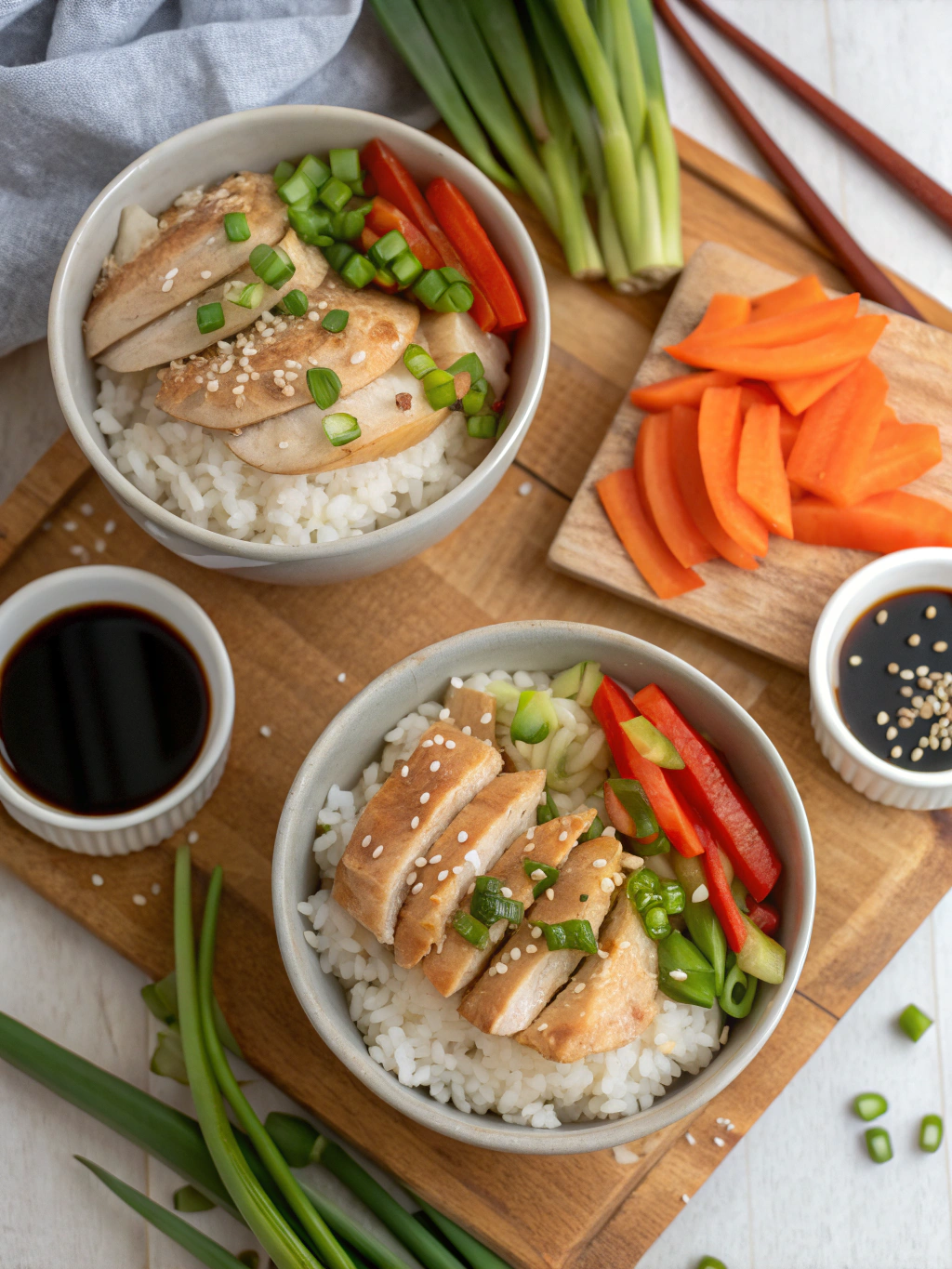
- 2 cups cooked jasmine rice (white, brown, or cauliflower rice for low-carb)
- 1 cup shredded carrots
- 1 cup cucumber, sliced
- 1 cup steamed broccoli florets
- 2 green onions, sliced
- Optional: edamame, avocado slices, or pickled ginger
Substitution Tips: Chicken thighs offer juicier results due to their higher fat content, but breasts work beautifully for those watching calories. For a gluten-free version, use tamari instead of soy sauce. If you don't have rice vinegar, apple cider vinegar creates a similarly tangy profile.
Timing
Preparation Time: 10 minutes
Cooking Time: 15 minutes
Total Time: 25 minutes
This recipe is approximately 40% faster than traditional teriyaki preparations that require marinating time. By using quick-cooking chicken thighs and a streamlined sauce method, you'll have dinner on the table in less time than it takes to order and pick up takeout—saving both time and money while enjoying fresher, healthier ingredients.
Step-by-Step Instructions
Step 1: Prepare Your Ingredients
Begin by cutting your chicken into bite-sized pieces, approximately 1-inch cubes. This uniform sizing ensures even cooking and maximizes the surface area for that glossy teriyaki glaze to cling to. While you're prepping, start your rice according to package directions—jasmine rice typically takes 15 minutes, perfectly timed with your chicken preparation. Mince your garlic, grate your ginger, and have your vegetables washed and ready. This mise en place approach prevents scrambling mid-recipe and keeps your cooking smooth and stress-free.
Step 2: Create Your Teriyaki Sauce
In a small bowl, whisk together soy sauce, honey, rice vinegar, grated ginger, and minced garlic until the honey dissolves completely. The combination creates that signature sweet-savory balance that makes teriyaki sauce so addictive. Set aside your cornstarch slurry (cornstarch mixed with water)—this will be your secret weapon for achieving that restaurant-quality glossy finish. Many home cooks skip this step, resulting in thin, watery sauces, but this simple addition transforms the texture dramatically.
Step 3: Cook the Chicken
Heat sesame oil in a large skillet or wok over medium-high heat until shimmering. Add your chicken pieces in a single layer—avoid overcrowding, which steams rather than sears the meat. Cook for 4-5 minutes without disturbing, allowing a golden crust to develop. Flip and cook another 3-4 minutes until the chicken reaches an internal temperature of 165°F. This high-heat searing locks in juices while creating delicious caramelized edges that add depth to your easy teriyaki chicken.
Step 4: Add the Sauce
Reduce heat to medium and pour your prepared teriyaki sauce over the cooked chicken. Stir to coat every piece evenly, then let the sauce bubble gently for 2 minutes. Add your cornstarch slurry, stirring constantly as the sauce thickens into a luxurious glaze—this usually takes 1-2 minutes. The sauce should coat the back of a spoon and cling beautifully to the chicken. Remove from heat immediately once thickened to prevent the sauce from becoming gummy.
Step 5: Assemble Your Bowls
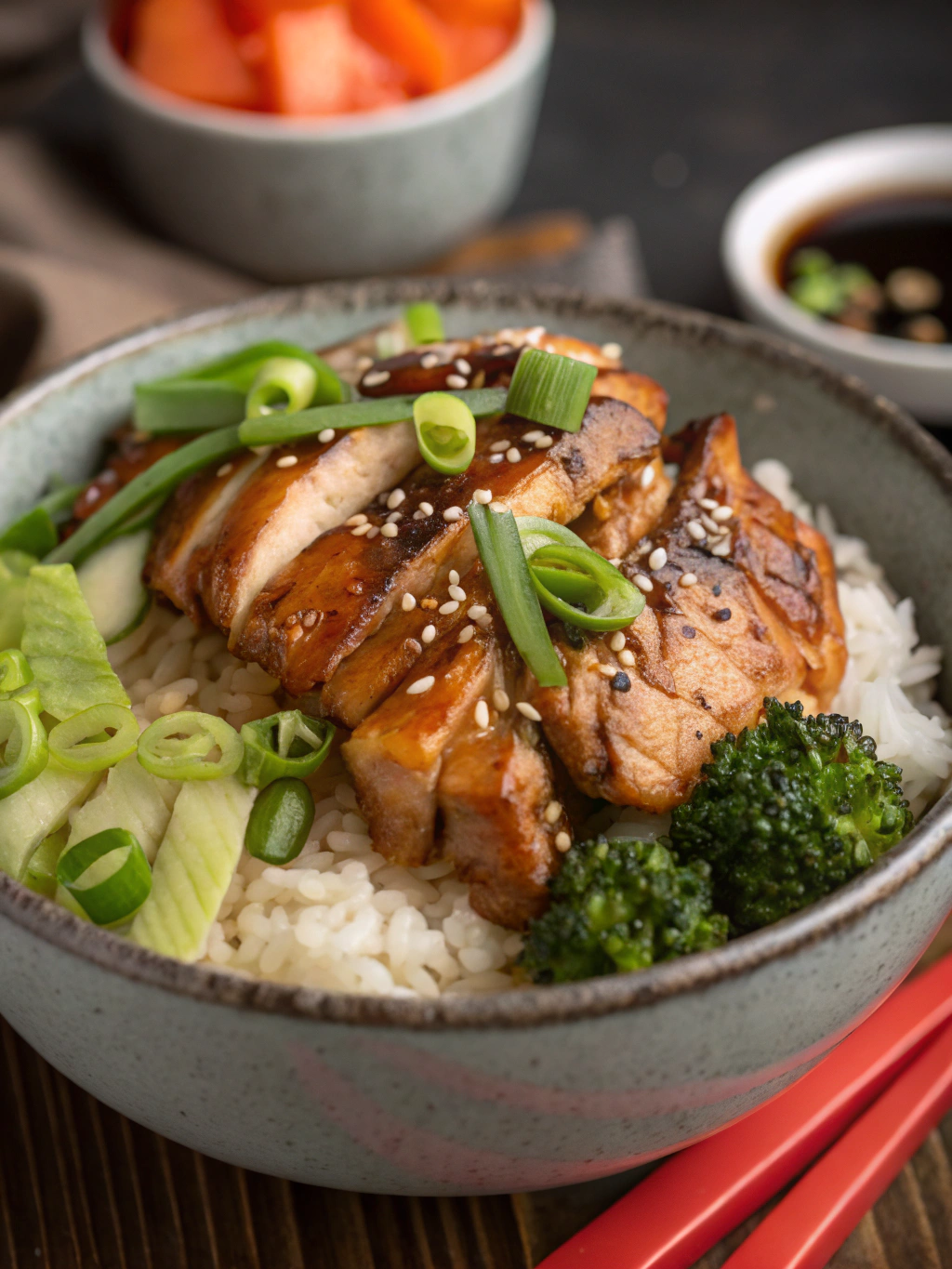
Divide your cooked rice among four bowls, creating a base for your masterpiece. Arrange the teriyaki chicken on one side, then artfully place your vegetables—shredded carrots, cucumber slices, steamed broccoli—around the bowl. Drizzle any remaining sauce from the pan over the chicken and rice. Sprinkle with sesame seeds and sliced green onions for color contrast and fresh flavor. The visual presentation transforms this from simple weeknight dinner to Instagram-worthy Asian chicken bowls.
Nutritional Information
Per Serving (1 bowl):
- Calories: 485
- Protein: 38g
- Carbohydrates: 52g
- Dietary Fiber: 3g
- Sugars: 14g
- Fat: 12g
- Saturated Fat: 2.5g
- Cholesterol: 115mg
- Sodium: 890mg
These healthy chicken rice bowls provide an excellent macronutrient balance, with 31% of calories from protein, supporting muscle maintenance and satiety. The vegetable additions contribute essential vitamins A and C, while sesame seeds add beneficial minerals like calcium and iron. Compared to typical restaurant versions that can exceed 800 calories per serving, this homemade version offers portion control and transparency about exactly what goes into your meal.
Healthier Alternatives for the Recipe
Reduce Sodium: Use low-sodium soy sauce or coconut aminos to cut sodium by up to 40%. You can also dilute regular soy sauce with equal parts water and add extra garlic and ginger for flavor depth.
Lower Carb Option: Replace white rice with cauliflower rice (reduces carbs by approximately 85%) or shirataki rice for a virtually carb-free base. Both alternatives maintain the bowl concept while dramatically reducing the glycemic impact.
Increase Protein: Add a soft-boiled egg or extra edamame to boost protein content by 6-8g per serving, enhancing satiety for those with higher protein requirements.
More Vegetables: Double your vegetable portions and reduce rice by half for a nutrient-dense, fiber-rich version that still feels satisfying. Consider adding bell peppers, snap peas, or mushrooms for variety.
Sugar-Free Adaptation: Substitute honey with a sugar-free sweetener like monk fruit or erythritol to create a keto-friendly version of these 30 minute chicken recipes.
Serving Suggestions
Present your teriyaki chicken rice bowls family-style by setting out the components separately, allowing everyone to customize their bowls according to preferences—kids might prefer more rice and less vegetables, while health-conscious adults can load up on greens.
For an elevated experience, serve alongside miso soup and seaweed salad for a complete Japanese-inspired dinner. The contrasting textures and temperatures create a more restaurant-like experience.
Make it a fast dinner idea for entertaining by prepping components ahead: cook rice in advance, cut vegetables earlier in the day, and prepare sauce up to 3 days ahead. When guests arrive, you'll only need 15 minutes to cook chicken and assemble bowls.
For meal prep enthusiasts, these quick meal prep bowls work beautifully when stored in compartmentalized containers. Keep sauce separate until reheating to prevent soggy rice, and add fresh vegetables just before eating for optimal texture.
Pair with a crisp cucumber salad dressed in rice vinegar or kimchi for probiotic benefits and palate-cleansing acidity that balances the sweet teriyaki flavors.
Common Mistakes to Avoid
Using Too Much Heat: Cooking teriyaki sauce over high heat causes the sugars to burn, creating bitter flavors. Medium heat allows proper caramelization without scorching—patience yields better results.
Skipping the Cornstarch: Without a thickening agent, your sauce remains thin and watery, sliding off the chicken rather than coating it. The cornstarch slurry is non-negotiable for authentic texture.
Overcrowding the Pan: When chicken pieces touch, they steam rather than sear, resulting in rubbery texture. Cook in batches if necessary, or use a larger skillet to ensure proper browning.
Not Tasting for Balance: Soy sauce brands vary significantly in saltiness. Always taste your sauce before adding to chicken and adjust with water, extra honey, or a splash of citrus to achieve your preferred balance.
Adding Vegetables Too Early: Vegetables like cucumber and carrots should remain crisp. Add them at assembly rather than cooking them with the chicken to maintain textural contrast.
Overcooking Chicken: Chicken thighs are forgiving, but breasts dry out quickly beyond 165°F. Use a meat thermometer to avoid the disappointment of tough, dry protein.
Storing Tips for the Recipe
Refrigeration: Store cooked teriyaki chicken in an airtight container for up to 4 days. Keep rice, chicken, and fresh vegetables in separate containers to maintain optimal texture. The sauce prevents chicken from drying out, actually improving flavor as it marinates.
Freezing: The cooked chicken with sauce freezes beautifully for up to 3 months. Portion into individual servings for grab-and-go convenience. Rice also freezes well—spread on a baking sheet to freeze individually, then transfer to bags to prevent clumping. Do not freeze fresh vegetables; add these after reheating.
Reheating: Microwave chicken and rice with a splash of water (about 1 tablespoon per serving) covered for 2-3 minutes, or until heated through. Stovetop reheating in a skillet with a little oil restores some of the original texture. Add fresh vegetables and garnishes after heating.
Meal Prep Strategy: For ultimate efficiency, prepare components on Sunday: cook a double batch of rice, prepare sauce (stores 1 week refrigerated), and cut vegetables. On weeknights, you'll only need to cook fresh chicken—a true 15-minute dinner solution.
Sauce Storage: Extra teriyaki sauce keeps refrigerated for up to 2 weeks in a sealed jar. Use it as a quick marinade for salmon, drizzle over roasted vegetables, or toss with noodles for variety.
Conclusion
These teriyaki chicken rice bowls prove that exceptional weeknight dinner recipes don't require hours of preparation or complicated techniques. In just 25 minutes, you've created a nutritionally balanced, flavor-packed meal that satisfies both your taste buds and your busy schedule. The versatility of this recipe means you'll never tire of it—swap proteins, change vegetables with the seasons, or adjust the sauce to your preference. Whether you're cooking for one, feeding a family, or preparing a week's worth of quick meal prep bowls, this recipe adapts effortlessly to your needs. Say goodbye to expensive takeout and hello to homemade meals that actually fit into real life. Try this recipe tonight and discover how simple it is to bring restaurant-quality Asian chicken bowls to your dinner table. Don't forget to share your creations and personal variations in the comments below—your tips might inspire someone else's new favorite dinner!
FAQs
Can I use chicken breast instead of thighs?
Absolutely! Chicken breasts work perfectly in this recipe, though they contain less fat and can dry out more easily. To prevent this, reduce cooking time slightly and remove from heat as soon as the internal temperature reaches 165°F. Consider pounding breasts to even thickness for uniform cooking.
Is this recipe gluten-free?
The recipe becomes gluten-free when you substitute regular soy sauce with tamari or certified gluten-free soy sauce. All other ingredients are naturally gluten-free. Always check labels on purchased sauces to confirm.
Can I make this dairy-free?
This recipe is naturally dairy-free! None of the ingredients contain dairy products, making it suitable for lactose-intolerant individuals or those following dairy-free diets.
How can I make the sauce thicker or thinner?
For a thicker sauce, add an extra teaspoon of cornstarch to your slurry. For thinner sauce, add water one tablespoon at a time until you reach desired consistency. Remember that sauce thickens as it cools, so err on the slightly thinner side while cooking.
What's the best rice for teriyaki bowls?
Jasmine rice offers aromatic, slightly sticky texture that's traditional for Asian bowls. Brown rice provides more fiber and nutrients with a nuttier flavor. Short-grain sushi rice creates an authentic Japanese experience. For lowest carbs, cauliflower rice works surprisingly well.
Can I prep this recipe ahead for meal prep?
Yes! This is one of the best quick meal prep bowls. Cook all components, store separately, and assemble throughout the week. The flavors actually deepen after a day in the refrigerator. Add fresh vegetables just before eating for best texture.
What other proteins work with this teriyaki sauce?
Salmon, shrimp, tofu, beef, and pork all shine with this versatile sauce. Adjust cooking times based on your protein choice—shrimp cooks in just 2-3 minutes per side, while tofu benefits from pressing excess water first and cooking until crispy.
My sauce didn't thicken—what went wrong?
This usually happens when the cornstarch wasn't properly mixed with water before adding (creating lumps instead of thickening), or the heat was too low. Ensure your slurry is lump-free and the sauce is gently bubbling when you add it. Give it 2 full minutes of simmering while stirring.