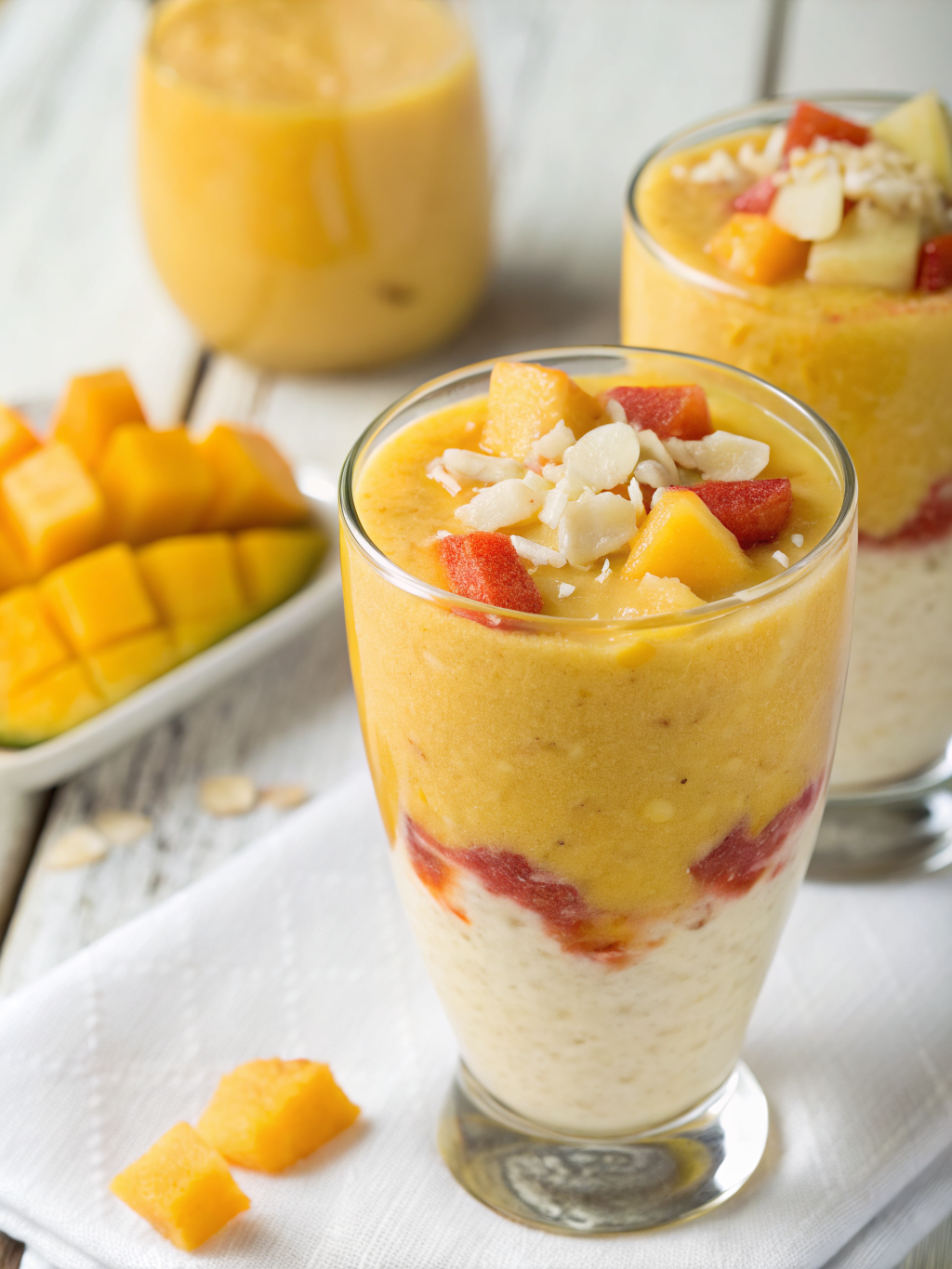
Easy Mango Banana Smoothie (5 Minutes!)
Table of Contents
Introduction
Did you know that Americans consume over 23 pounds of bananas per person annually, yet most people have never experienced the tropical fusion of a perfectly blended mango banana smoothie? This quick breakfast smoothie combines the creamy sweetness of ripe bananas with the vibrant, tangy notes of fresh mango to create a nutritional powerhouse that takes just 5 minutes to prepare. Whether you’re rushing to work, need a post-workout refuel, or simply crave a healthy fruit smoothie that tastes like dessert, this easy smoothie recipe delivers on all fronts. Packed with essential vitamins, natural sugars for sustained energy, and creamy Greek yogurt for protein, this 5 minute breakfast will transform your morning routine and keep you satisfied until lunch.
Ingredients List
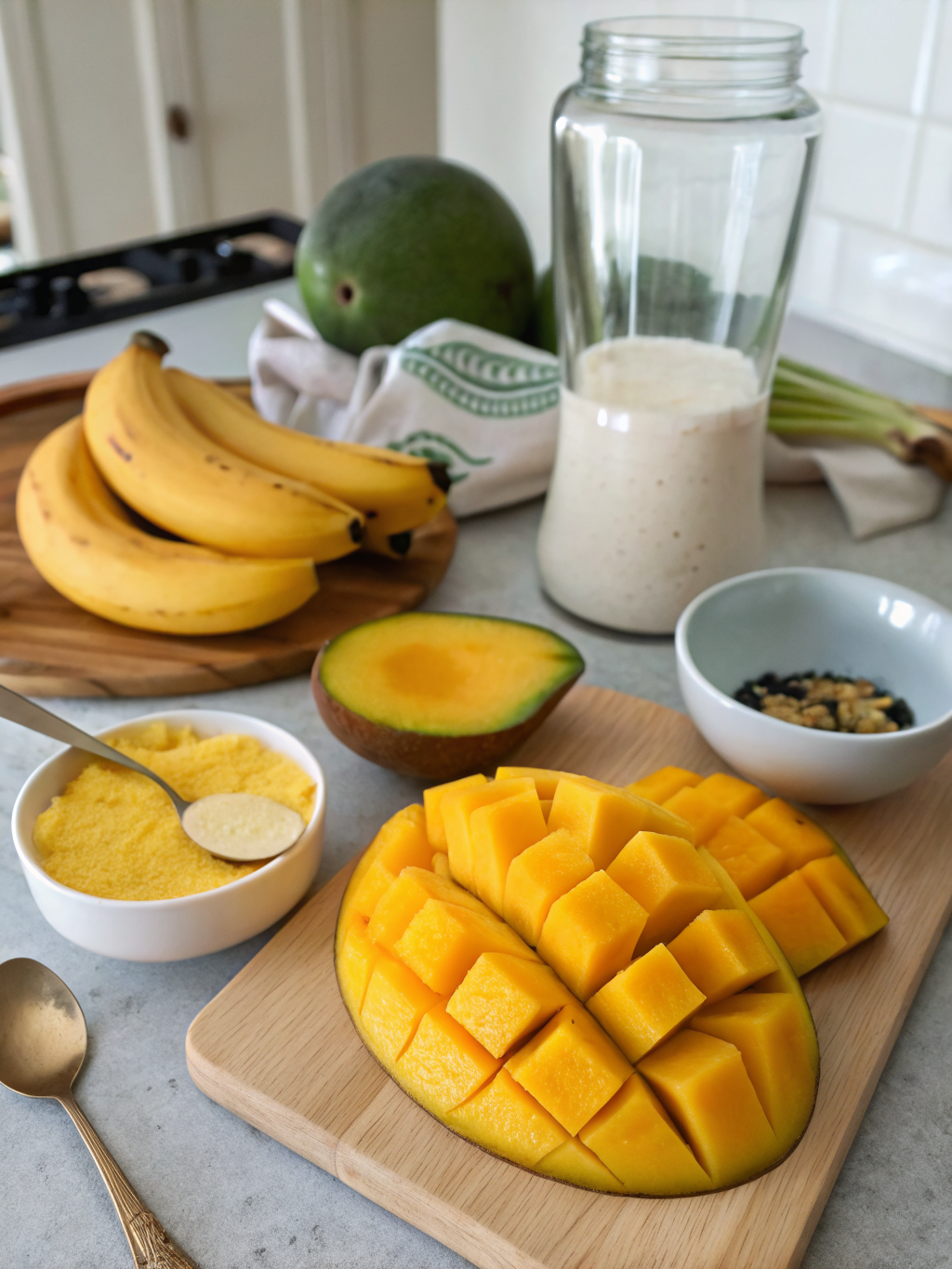
Here’s everything you need for this refreshing mango banana smoothie:
- 1 cup frozen mango chunks (or fresh mango, peeled and cubed) – provides tropical sweetness and vitamin C
- 1 large ripe banana – adds natural creaminess and potassium (substitute with frozen banana for extra thickness)
- 1/2 cup Greek yogurt – contributes protein and probiotics (use coconut yogurt for dairy-free option)
- 1/2 cup milk of choice – cow’s milk, almond milk, oat milk, or coconut milk all work beautifully
- 1 tablespoon honey or maple syrup (optional) – for added sweetness if your fruit isn’t super ripe
- 1/2 cup ice cubes – creates that perfect frosty texture (omit if using frozen fruit)
- Fresh mint leaves (optional) – adds a refreshing finish
Substitution Tips: Replace Greek yogurt with silken tofu for extra protein or use avocado for healthy fats and extra creaminess. Swap honey with dates for refined sugar-free sweetness.
Timing
This mango smoothie recipe is designed for ultimate efficiency:
- Prep Time: 3 minutes (gathering and measuring ingredients)
- Blending Time: 1-2 minutes (depending on blender power)
- Total Time: 5 minutes
That’s 75% faster than traditional breakfast preparation! Most morning meals require 15-20 minutes of active cooking time, making this banana smoothie an ideal solution for busy mornings. You’ll spend less time cooking and more time enjoying your nutritious breakfast.
Step-by-Step Instructions
Step 1: Prepare Your Ingredients
Peel your ripe banana and break it into chunks. If using fresh mango, peel and cube the flesh away from the pit. Measure out your Greek yogurt and milk. Having everything ready before you start blending ensures a smooth, efficient process and prevents any ingredient from being forgotten.
Pro Tip: Use overripe bananas with brown spots for maximum sweetness and natural flavor enhancement.
Step 2: Layer Ingredients in Blender
Add ingredients to your blender in this specific order: liquid first (milk), followed by Greek yogurt, then banana chunks, mango pieces, and ice last. This strategic layering helps the blender blades catch the liquid immediately, creating a vortex that pulls the frozen fruit down for smoother blending.
Pro Tip: Start with less liquid and add more if needed—it’s easier to thin a smoothie than to thicken one.
Step 3: Blend Until Smooth
Secure the blender lid tightly and blend on high speed for 45-60 seconds, or until completely smooth and creamy with no visible chunks. You should see a consistent, velvety texture with a gorgeous golden-orange color. If your smoothie seems too thick, add milk one tablespoon at a time until you reach your desired consistency.
Pro Tip: Stop halfway through blending and scrape down the sides with a spatula to ensure even mixing.
Step 4: Taste and Adjust
Give your smoothie a quick taste test. If you prefer it sweeter, add honey or maple syrup and blend for an additional 10 seconds. If it’s too thick, add more liquid; if too thin, toss in more frozen fruit and blend again.
Step 5: Serve Immediately
Pour your freshly blended mango banana smoothie into chilled glasses. Garnish with fresh mango slices, banana rounds, a sprinkle of chia seeds, or a mint leaf for an Instagram-worthy presentation. Enjoy immediately for the best texture and maximum nutritional benefits.
Nutritional Information
Each serving (approximately 12 oz) of this healthy fruit smoothie contains:
- Calories: 220-250 calories
- Protein: 10-12g (thanks to Greek yogurt)
- Carbohydrates: 42-45g (primarily from natural fruit sugars)
- Dietary Fiber: 4-5g (supports digestive health)
- Fat: 3-4g (mostly from yogurt)
- Vitamin C: 85-95% of daily value
- Potassium: 550-600mg (15% of daily value)
- Calcium: 150-200mg (15-20% of daily value)
This nutritional profile makes the mango banana smoothie an excellent balanced breakfast option, providing sustained energy without refined sugars. The combination of protein, fiber, and natural carbohydrates helps stabilize blood sugar levels throughout your morning.
Healthier Alternatives for the Recipe
Boost the Protein: Add 1 scoop of vanilla protein powder or 2 tablespoons of peanut butter to increase protein content to 20-25g per serving, perfect for post-workout recovery.
Increase Fiber: Incorporate 1 tablespoon of ground flaxseed or chia seeds for an extra 3-4g of fiber and omega-3 fatty acids.
Reduce Sugar: Skip the honey entirely and rely on naturally sweet, ripe fruit. Use unsweetened almond milk instead of regular milk to cut additional sugars.
Add Greens: Sneak in a handful of fresh spinach or kale for added vitamins and minerals without altering the taste significantly—the mango and banana mask the green flavor completely.
Make it Vegan: Substitute Greek yogurt with coconut yogurt or cashew yogurt, and use plant-based milk alternatives like oat, almond, or soy milk.
Enhance Gut Health: Add 1 tablespoon of probiotic powder or use kefir instead of regular milk for additional beneficial bacteria.
Serving Suggestions
Elevate your mango banana smoothie experience with these creative serving ideas:
Smoothie Bowl Transformation: Pour your smoothie into a bowl and top with granola, sliced fresh fruit, coconut flakes, hemp seeds, and a drizzle of almond butter for a satisfying breakfast bowl that’s both beautiful and filling.
Portable Breakfast: Pour into a mason jar or insulated tumbler with a lid and straw for an on-the-go breakfast during your commute.
Afternoon Snack: Serve in smaller 6-8 oz portions as a refreshing afternoon pick-me-up that provides natural energy without the coffee crash.
Post-Workout Fuel: Consume within 30 minutes after exercise to replenish glycogen stores and support muscle recovery with quality protein.
Kid-Friendly Treat: Freeze the smoothie mixture in popsicle molds for healthy, homemade frozen treats that kids will love on hot summer days.
Brunch Accompaniment: Pair with whole grain toast, avocado, and poached eggs for a complete, balanced brunch spread.
Common Mistakes to Avoid
Mistake #1: Using Unripe Fruit – Underripe bananas and mangos lack sweetness and can make your smoothie taste bland or starchy. Solution: Always use bananas with brown spots and fragrant, slightly soft mangos.
Mistake #2: Over-Blending – Blending for too long (over 2 minutes) can warm up your smoothie and create a less refreshing drink. Solution: Blend just until smooth and serve immediately.
Mistake #3: Wrong Liquid Ratio – Too much liquid creates a watery, disappointing smoothie, while too little stresses your blender motor. Solution: Start with 1/2 cup liquid and add gradually as needed.
Mistake #4: Skipping the Ice or Frozen Fruit – Room temperature smoothies aren’t as refreshing or satisfying. Solution: Always use either frozen fruit or add ice cubes for that perfect frosty texture.
Mistake #5: Not Using a High-Powered Blender – Low-quality blenders leave chunks and create uneven texture. Solution: Invest in a quality blender or blend in shorter intervals, scraping down sides frequently.
Mistake #6: Adding Too Many Ingredients – Overcomplicating your smoothie with 10+ ingredients can muddle flavors and increase sugar content unnecessarily. Solution: Stick to 5-7 key ingredients that complement each other.
Storing Tips for the Recipe
Refrigerator Storage: Store any leftover mango banana smoothie in an airtight container or mason jar in the refrigerator for up to 24 hours. Natural separation will occur—simply shake or stir vigorously before drinking. Note that texture and flavor are best within 6-8 hours of preparation.
Freezer Storage: Pour smoothie into freezer-safe containers or ice cube trays and freeze for up to 3 months. Smoothie cubes can be re-blended with a splash of milk for quick preparation, or allowed to thaw in the refrigerator overnight and stirred before consuming.
Meal Prep Strategy: Prepare individual freezer bags with pre-portioned fruit (mango chunks, banana slices) ahead of time. Label bags with dates and simply dump contents into blender with yogurt and milk each morning—it takes the prep time down to just 2 minutes.
Preventing Oxidation: If storing, add a squeeze of fresh lemon juice to help prevent browning and preserve vitamin C content. Fill containers to the top to minimize air exposure.
Best Practices: Always store smoothies in opaque or dark-colored containers when possible, as light exposure can degrade certain nutrients. Glass containers are ideal as they don’t absorb odors or flavors.
Conclusion
This easy mango banana smoothie proves that healthy eating doesn’t have to be time-consuming or complicated. In just 5 minutes, you can create a nutritious, delicious quick breakfast smoothie that rivals any café creation—without the hefty price tag or questionable ingredients. With its perfect balance of natural sweetness, creamy texture, and impressive nutritional profile, this Greek yogurt smoothie will quickly become your go-to morning solution. Whether you’re feeding busy teenagers rushing to school, fueling your own hectic workday, or simply seeking a refreshing afternoon treat, this versatile recipe adapts to your needs beautifully.
Ready to transform your mornings? Blend up this tropical delight tomorrow and experience the difference a truly great smoothie can make. Don’t forget to share your creation on social media and tag us—we love seeing your smoothie variations! Looking for more easy smoothie recipes? Explore our collection of 5-minute breakfast ideas that make healthy living deliciously simple.
FAQs
Q: Can I make this mango banana smoothie without yogurt?
A: Absolutely! Replace Greek yogurt with an extra 1/2 cup of milk, add 1/4 avocado for creaminess, or use silken tofu for protein without dairy. The texture will be slightly less thick but still delicious.
Q: Is frozen or fresh fruit better for smoothies?
A: Both work wonderfully! Frozen fruit creates a thicker, colder smoothie without needing ice, while fresh fruit offers brighter flavor. Many people prefer frozen mango as it’s pre-cut, more affordable, and available year-round.
Q: How can I make my smoothie thicker?
A: Use frozen banana instead of fresh, reduce liquid by 2-3 tablespoons, add more Greek yogurt, include 1/4 avocado, or toss in a tablespoon of oats or chia seeds. These additions boost thickness without compromising flavor.
Q: Can I prepare this smoothie the night before?
A: While freshly blended is ideal, you can prepare it up to 12 hours in advance. Store in an airtight container in the refrigerator and shake well before drinking. Alternatively, prep ingredient bags in the freezer for quick morning blending.
Q: Is this smoothie suitable for weight loss?
A: Yes! At approximately 220-250 calories with good protein and fiber content, this smoothie provides satiety that helps control appetite throughout the morning. Skip added sweeteners and use low-fat yogurt to reduce calories further while maintaining nutritional benefits.
Q: What’s the best type of blender for smoothies?
A: High-powered blenders (like Vitamix or Blendtec) create the smoothest texture but aren’t necessary. Mid-range blenders work fine—just blend a bit longer and add liquid gradually. Even basic blenders can work if you use softer, riper fruit and smaller chunks.
Q: Can kids drink this mango banana smoothie?
A: Definitely! This healthy fruit smoothie is perfect for children, providing natural sugars for energy, calcium for growing bones, and vitamins for immune support. Kids love the naturally sweet taste and bright color. For picky eaters, this is an excellent way to sneak in nutrition.