
Easy 20-Minute Pan-Seared Cod with Lemon Caper Sauce
Easy 20-Minute Pan-Seared Cod with Lemon Caper Sauce
Introduction
Did you know that fish consumption has increased by 122% over the past five decades, yet only 19% of Americans regularly cook seafood at home due to perceived complexity? What if you could create a restaurant-quality pan seared cod recipe in just 20 minutes with minimal ingredients and zero intimidation? This quick seafood dinner transforms delicate cod fillets into golden-crusted perfection, topped with a vibrant lemon caper sauce that balances tangy brightness with savory depth. Whether you're a seafood novice or an experienced home chef looking for easy fish recipes, this healthy cod dinner delivers impressive results without the stress. The secret lies in simple techniques that professional chefs use—high heat, minimal movement, and quality ingredients that let the fish shine. With this pan seared cod recipe, you'll discover that cooking fish at home doesn't require culinary school credentials, just 20 minutes and the right approach to create a weeknight fish meal that rivals your favorite coastal bistro.
Ingredients List
For the Pan-Seared Cod:
- 4 cod fillets (6 ounces each, about 1-inch thick) – substitute with halibut, haddock, or sea bass for similar results
- 2 tablespoons olive oil – or avocado oil for higher smoke point
- 1 teaspoon sea salt – divided
- ½ teaspoon freshly ground black pepper
- 3 tablespoons all-purpose flour – or almond flour for gluten-free option
- 2 tablespoons unsalted butter
For the Lemon Caper Sauce:
- 3 tablespoons capers, drained and rinsed – their briny pop adds restaurant-quality sophistication
- 3 cloves garlic, minced finely – releasing aromatic oils that perfume the entire sauce
- ½ cup low-sodium chicken broth – or white wine for deeper complexity
- Juice of 1 large lemon (about 3 tablespoons) – plus zest for extra citrus punch
- 2 tablespoons cold butter, cubed – creates silky, glossy texture
- 2 tablespoons fresh parsley, chopped – adds vibrant color and fresh finish
- ¼ teaspoon red pepper flakes (optional) – for subtle warmth
Timing
Preparation Time: 5 minutes
Cooking Time: 15 minutes
Total Time: 20 minutes
This 20 minute cod recipe is approximately 65% faster than traditional oven-baked fish preparations, making it perfect for busy weeknights when time is precious but quality cannot be compromised. The streamlined process eliminates unnecessary steps while maximizing flavor development through strategic high-heat cooking.
Step-by-Step Instructions
Step 1: Prepare the Cod Fillets
Pat the cod fillets completely dry using paper towels—moisture is the enemy of that coveted golden crust. Season both sides generously with ¾ teaspoon salt and black pepper. Lightly dust each fillet with flour, shaking off any excess. This thin coating creates a barrier that helps achieve superior browning while keeping the interior moist and flaky. Let the seasoned fillets rest at room temperature for 3-4 minutes while you heat the pan.
Step 2: Achieve the Perfect Sear
Heat olive oil in a large skillet (preferably stainless steel or cast iron) over medium-high heat until it shimmers but doesn't smoke—about 2 minutes. Carefully place the cod fillets presentation-side down, leaving space between each piece. Resist the urge to move them! Let the fillets cook undisturbed for 4-5 minutes. You'll know they're ready to flip when the edges turn opaque and golden-brown crust forms underneath. Add 1 tablespoon of butter to the pan, allowing it to foam around the fish.
Step 3: Complete the Cooking
Gently flip each fillet using a thin spatula, supporting the fish to prevent breaking. Cook for an additional 3-4 minutes until the internal temperature reaches 145°F and the fish flakes easily with a fork. The flesh should be opaque throughout with a tender, moist texture. Transfer the cooked fillets to a warm plate and tent loosely with foil while you prepare the sauce.
Step 4: Build the Lemon Caper Sauce
In the same skillet (don't clean it—those browned bits are flavor gold), reduce heat to medium. Add the remaining tablespoon of butter, then sauté minced garlic for 30 seconds until fragrant but not browned. Add capers and red pepper flakes, stirring for another 30 seconds to release their aromatic oils.
Step 5: Finish the Sauce
Pour in the chicken broth and lemon juice, scraping the bottom of the pan with a wooden spoon to deglaze—this incorporates all those flavorful brown bits into your sauce. Let the mixture simmer vigorously for 2-3 minutes until reduced by half. Remove from heat and swirl in the cold butter cubes one at a time, creating a luxuriously glossy emulsion. Stir in fresh parsley and taste, adjusting seasoning with remaining salt if needed.
Step 6: Plate and Serve
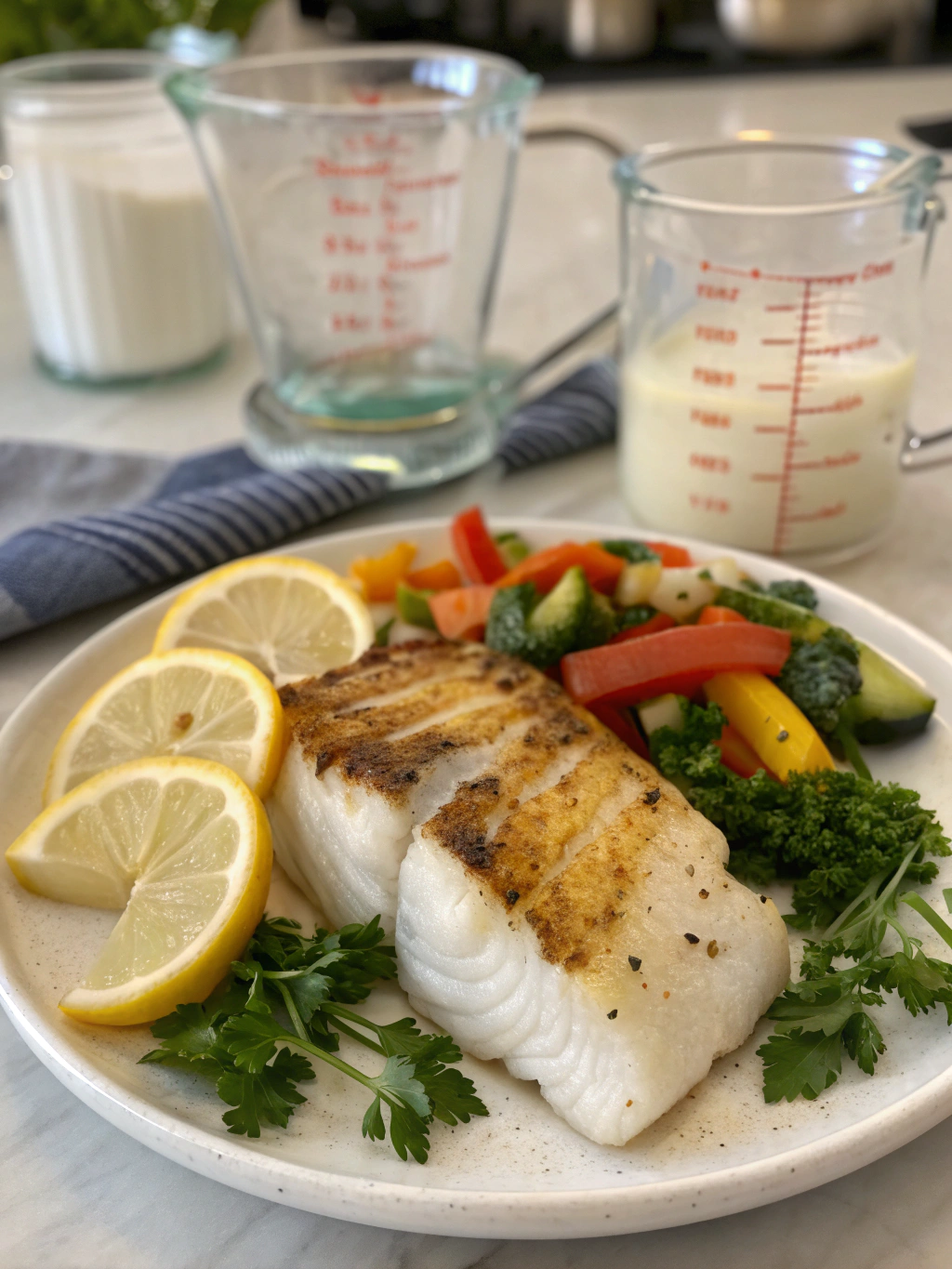
Return the cod fillets to the skillet briefly to coat with sauce, or arrange them on serving plates and spoon the lemon caper sauce generously over each piece. Garnish with additional parsley and lemon wedges for a presentation that looks as impressive as it tastes.
Nutritional Information
Per Serving (1 fillet with sauce):
- Calories: 285
- Protein: 32g (64% of daily value)
- Total Fat: 14g
- Saturated Fat: 6g
- Carbohydrates: 6g
- Fiber: 0.5g
- Sugar: 0.5g
- Sodium: 720mg
- Omega-3 Fatty Acids: 450mg
- Vitamin D: 15% DV
- Vitamin B12: 45% DV
- Selenium: 85% DV
Cod is an exceptional source of lean protein, providing all nine essential amino acids while remaining remarkably low in calories. The omega-3 fatty acids support cardiovascular health, while selenium acts as a powerful antioxidant. This healthy cod dinner delivers restaurant-quality taste with nutrition that supports wellness goals.
Healthier Alternatives for the Recipe
Reduce Sodium: Use low-sodium broth and rinse capers thoroughly, then reduce added salt by half—you'll save approximately 300mg sodium per serving.
Lower Fat Content: Replace butter with additional olive oil or use a light butter substitute, reducing saturated fat by 40% while maintaining rich flavor through the capers and lemon.
Grain-Free Option: Substitute almond flour or coconut flour for all-purpose flour to create a paleo-friendly version that still achieves excellent crust development.
Dairy-Free Adaptation: Use olive oil exclusively instead of butter, adding a tablespoon of nutritional yeast to the sauce for depth and umami richness.
Increase Vegetables: Add halved cherry tomatoes, baby spinach, or thinly sliced zucchini to the sauce during the final minute of cooking for added nutrients and fiber.
Serving Suggestions
This simple white fish recipe pairs beautifully with various accompaniments. Serve over creamy cauliflower mash for a low-carb option, or alongside garlic herb quinoa for added protein and fiber. Roasted asparagus with lemon zest complements the citrus notes, while a simple arugula salad with shaved parmesan adds peppery contrast. For a Mediterranean-inspired plate, serve with warm couscous studded with sun-dried tomatoes and fresh basil. The versatile sauce also works wonderfully spooned over steamed green beans or roasted Brussels sprouts. Consider crusty artisan bread for soaking up every drop of that tangy, buttery sauce—pure indulgence that feels justified given the dish's overall nutritional profile.
Common Mistakes to Avoid
Overcrowding the Pan: Placing too many fillets in the skillet drops the temperature, resulting in steaming rather than searing. Cook in batches if necessary, maintaining that crucial high heat.
Moving the Fish Too Soon: Fillets need 4-5 minutes of undisturbed contact to develop proper crust. Premature flipping causes sticking and tears the delicate flesh.
Overcooking: Cod continues cooking from residual heat after removal from the pan. Pull fillets at 140-145°F internal temperature—they'll reach perfect doneness while resting.
Using Wet Fish: Moisture prevents browning and creates splattering. Always pat fillets thoroughly dry before seasoning.
Adding Butter Too Early: Butter burns at high temperatures. Add it during the final minutes of cooking or when building the sauce.
Skipping the Deglazing Step: Those browned bits (fond) contain concentrated flavor. Always deglaze with liquid to incorporate them into your sauce.
Storing Tips for the Recipe
Refrigeration: Store cooked cod separately from the sauce in airtight containers for up to 2 days. The fish maintains better texture when stored independently. Reheat gently in a 300°F oven for 8-10 minutes, or in the microwave at 50% power in 30-second intervals.
Sauce Storage: The lemon caper sauce keeps refrigerated for up to 4 days. The butter may separate when cold; simply reheat gently while whisking to re-emulsify.
Freezing: While fresh cod freezes well (up to 3 months wrapped tightly), cooked fish loses texture upon thawing. Freeze only if necessary, and use within 1 month. Thaw overnight in the refrigerator.
Make-Ahead Strategy: Season and flour the raw fillets up to 4 hours ahead, storing them covered in the refrigerator. Bring to room temperature for 10 minutes before cooking. Prepare sauce components (minced garlic, measured capers, fresh lemon juice) in advance for even quicker assembly.
Meal Prep: This dish works excellently for meal prep when fish quality is fresh. Cook fillets as directed, store with sauce separate, and pair with pre-portioned vegetables and grains for grab-and-go lunches that feel gourmet.
Conclusion
This 20 minute cod recipe proves that sophisticated seafood dinners don't require hours in the kitchen or professional training. By mastering the simple technique of pan-searing and creating a bright, flavorful lemon caper sauce, you've unlocked a weeknight fish meal that impresses both family and guests while supporting your health goals with lean protein and valuable nutrients. The beauty of this easy fish recipe lies in its versatility—it adapts to various dietary needs, pairs with countless sides, and delivers restaurant-quality results from your home kitchen. Don't let seafood intimidation keep you from enjoying delicious, nutritious fish dinners. Try this pan seared cod recipe tonight and discover how accessible quick seafood dinners can be. Share your results in the comments below, and explore our collection of other simple white fish recipes to expand your culinary confidence. Your journey to effortless, impressive home cooking starts with one perfectly seared fillet.
FAQs
Q: Can I use frozen cod fillets for this recipe?
A: Yes, but ensure they're completely thawed and thoroughly patted dry. Frozen cod contains more moisture, which can prevent proper browning. Thaw overnight in the refrigerator for best results.
Q: What's the best way to know when cod is perfectly cooked?
A: Cod is done when it reaches an internal temperature of 145°F and flakes easily with a fork. The flesh should be opaque throughout with a moist, tender texture—not dry or rubbery.
Q: Can I make this recipe without capers?
A: While capers provide signature briny flavor, you can substitute chopped green olives or simply increase the lemon juice and add a pinch of salt to achieve tangy brightness.
Q: Why does my fish stick to the pan?
A: Three common causes: insufficient oil/heat, moving the fish too soon, or residue on the pan. Ensure your skillet is properly heated, the fish is dry, and don't flip until a crust forms naturally.
Q: Is cod a sustainable seafood choice?
A: Sustainability varies by source. Look for Pacific cod or Atlantic cod certified by the Marine Stewardship Council (MSC). Check Seafood Watch for current recommendations in your region.
Q: Can I prepare this recipe with other types of fish?
A: Absolutely! This technique works beautifully with halibut, haddock, mahi-mahi, sea bass, or tilapia. Adjust cooking time based on fillet thickness, maintaining the 145°F target temperature.
Q: How do I prevent the butter from burning when pan-searing?
A: Add butter during the final 1-2 minutes of cooking rather than at the beginning, or use a mixture of butter and oil. The oil raises the smoke point, allowing you to achieve high heat without burning.
Q: What if I don't have chicken broth for the sauce?
A: Substitute with vegetable broth, fish stock, or dry white wine (Sauvignon Blanc or Pinot Grigio work excellently). Even water with an extra squeeze of lemon produces a lighter but flavorful sauce.