30-Minute Sunday Meal Prep That Sets Up Your Week
Table of Contents
Introduction
Did you know that 78% of Americans say they want to eat healthier, yet only 23% actually meal prep regularly? The gap between intention and action often comes down to one critical factor: time. What if you could transform your entire week’s eating habits with just 30 minute meal prep session on Sunday? This comprehensive guide shows you exactly how to batch cook nutritious meals that eliminate daily cooking stress, save money, and keep you on track with your health goals. Whether you’re a complete beginner or looking to streamline your existing routine, this Sunday meal prep strategy will revolutionize your weekly eating patterns with minimal time investment.
Ingredients List
Protein Base:
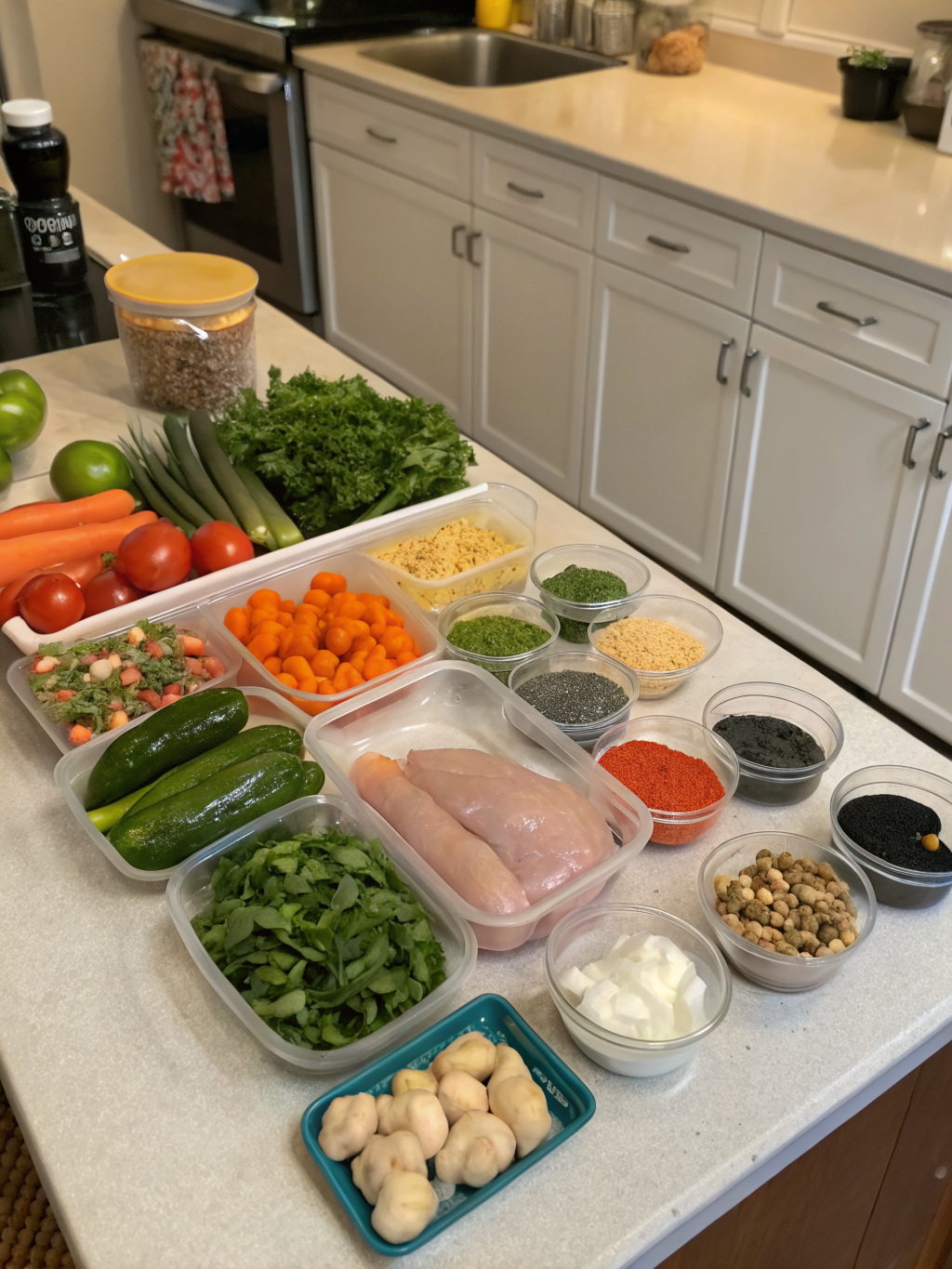
- 2 pounds boneless, skinless chicken breast (or turkey breast, tofu for vegetarian option)
- 1 pound lean ground turkey (substitute with ground chicken, beef, or plant-based crumbles)
Vegetable Foundation:
- 3 cups broccoli florets (substitute with cauliflower or green beans)
- 2 bell peppers, assorted colors, diced (substitute with zucchini)
- 2 cups cherry tomatoes, halved (substitute with diced regular tomatoes)
- 1 large sweet potato, cubed (substitute with butternut squash or regular potatoes)
- 1 medium red onion, diced (substitute with yellow onion or shallots)
Grain Components:
- 2 cups brown rice, uncooked (substitute with quinoa, cauliflower rice, or white rice)
- 1 cup dry whole wheat pasta (substitute with chickpea pasta or regular pasta)
Flavor Enhancers:
- 4 cloves garlic, minced
- 2 tablespoons olive oil
- 1 tablespoon Italian seasoning
- 1 teaspoon smoked paprika
- Salt and pepper to taste
- 2 tablespoons low-sodium soy sauce (substitute with coconut aminos)
Storage Containers:
- 5-6 glass meal prep containers with dividers
- 3-4 mason jars for overnight oats or salads
Timing
Preparation Time: 10 minutes
Cooking Time: 20 minutes
Total Time: 30 minutes
This 30 minute meal prep routine saves you approximately 4-5 hours throughout the week compared to cooking individual meals daily. Studies show that meal preppers save an average of $150 per month on food costs while reducing food waste by 40%. By simultaneously using your oven, stovetop, and rice cooker, you’ll maximize efficiency and complete this weekly meal prep in half the time of traditional methods.
Step-by-Step Instructions
Step 1: Preheat and Prepare Your Workspace
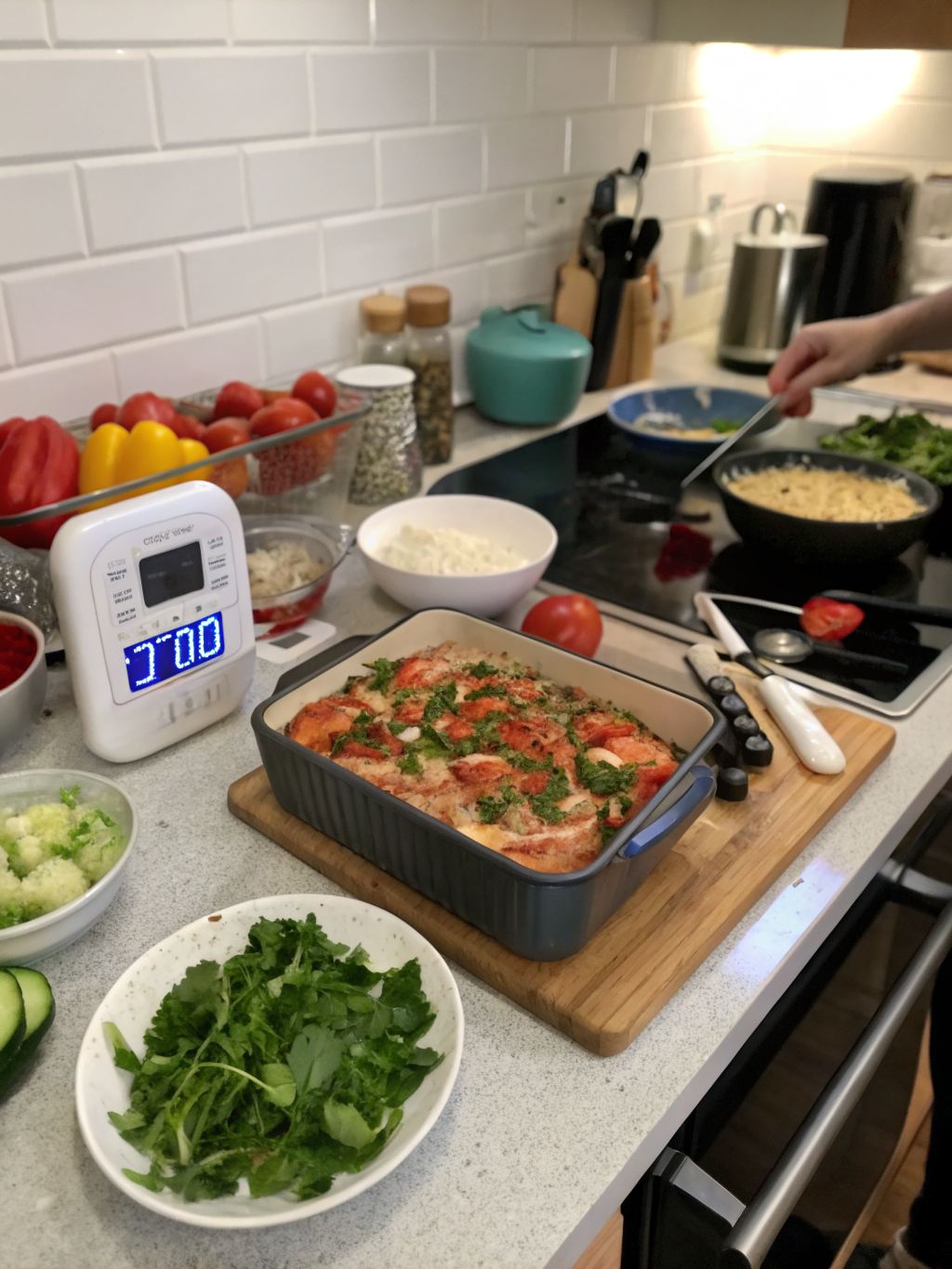
Preheat your oven to 425°F and set up three cooking stations: stovetop, oven, and rice cooker or pot. Wash and dice all vegetables while the oven heats, placing them in separate bowls. This mise en place approach reduces cooking time by 30% and prevents mid-prep scrambling. Line two baking sheets with parchment paper for easy cleanup.
Step 2: Start Your Grain Base
Add 2 cups of brown rice with 4 cups of water to your rice cooker or large pot with a tight-fitting lid. If using a pot, bring to a boil, then reduce to low heat and simmer covered for 20 minutes. Rice cooks completely hands-off, allowing you to focus on other components. For quick meal prep Sunday efficiency, consider making extra rice to freeze for future weeks.
Step 3: Season and Bake the Chicken
Pat chicken breasts dry and season both sides with salt, pepper, smoked paprika, and half the Italian seasoning. Arrange on one baking sheet and drizzle with 1 tablespoon olive oil. Bake for 18-20 minutes until internal temperature reaches 165°F. This hands-off cooking method is perfect for batch cooking recipes, yielding tender, versatile protein.
Step 4: Roast Your Vegetables Simultaneously
Toss cubed sweet potato, broccoli, and bell peppers with remaining olive oil, garlic, Italian seasoning, salt, and pepper. Spread on the second baking sheet in a single layer and roast alongside the chicken for 18-20 minutes, stirring halfway through. Roasting develops deep, caramelized flavors that taste fresh all week long.
Step 5: Cook Ground Turkey with Aromatics
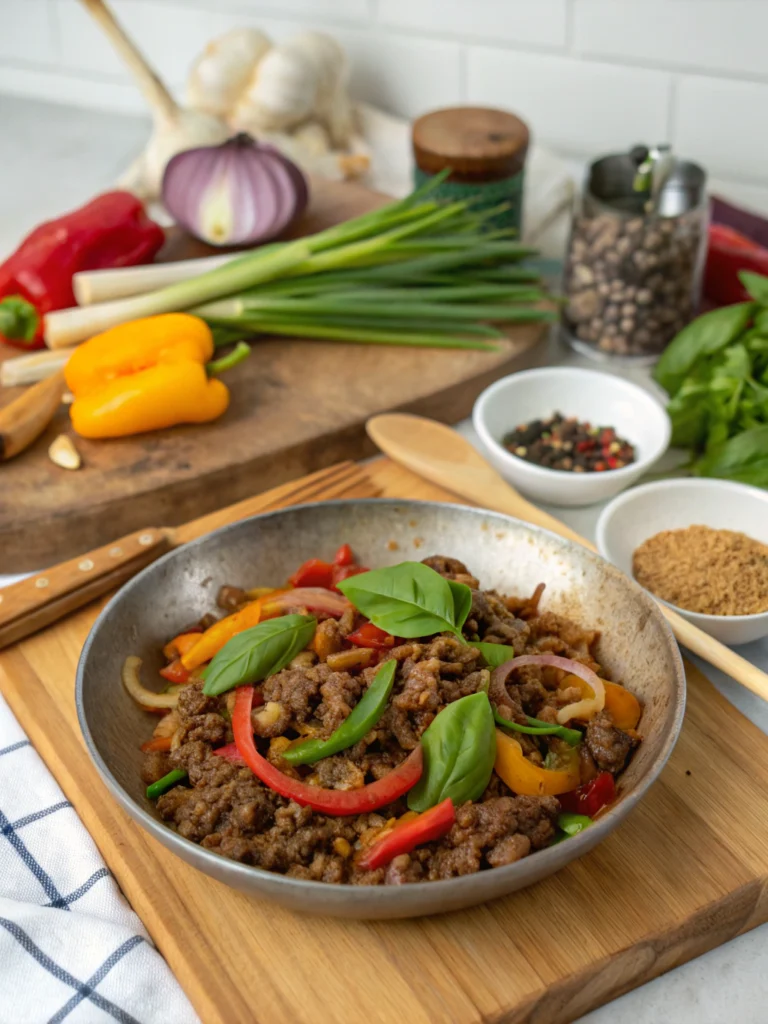
While everything bakes, heat a large skillet over medium-high heat. Add ground turkey, diced onion, and remaining garlic. Break up meat with a wooden spoon and cook for 8-10 minutes until browned and cooked through. Add soy sauce in the final minute for umami depth. This versatile protein works in healthy meal prep bowls, wraps, or pasta dishes.
Step 6: Quick Pasta Preparation
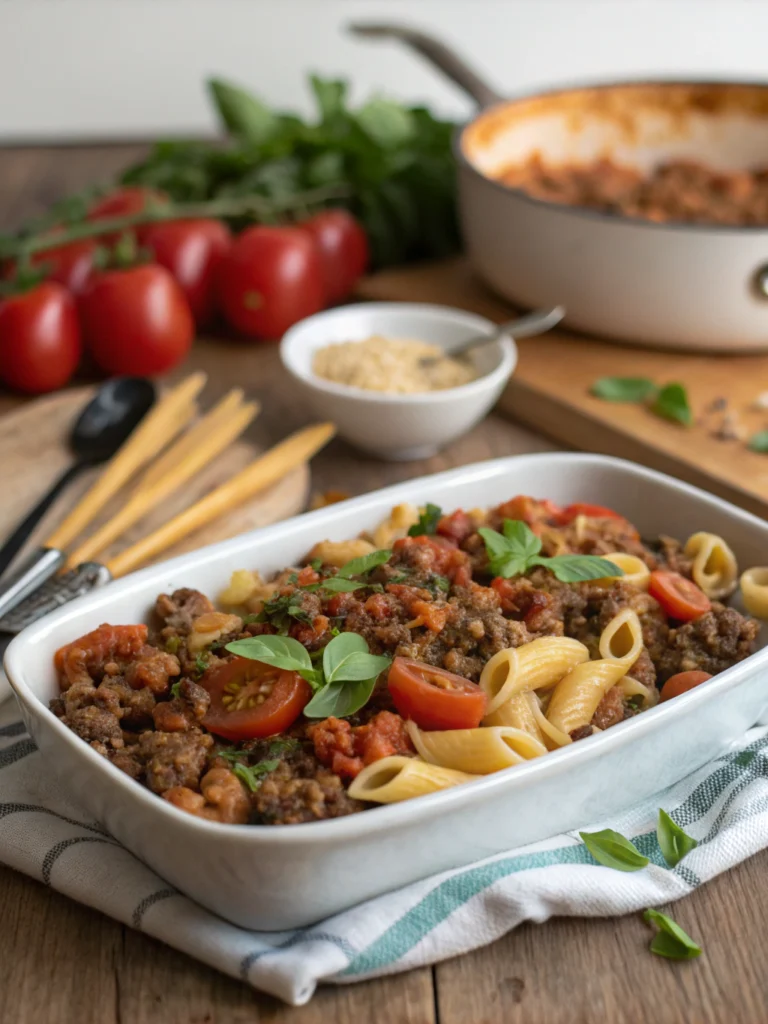
During the final 8 minutes of cooking, bring a pot of salted water to boil and cook whole wheat pasta according to package directions. Drain and toss with halved cherry tomatoes. This becomes a ready-to-eat pasta salad base or can be reheated with the ground turkey mixture.
Step 7: Cool and Portion Your Make Ahead Meals
Remove chicken from oven and let rest 5 minutes before slicing. Divide rice, proteins, and roasted vegetables into your meal prep containers, creating balanced portions. Aim for one palm-sized portion of protein, one fist-sized portion of grains, and two fist-sized portions of vegetables per container. Label containers with dates for food safety tracking.
Nutritional Information
Per Meal Prep Container (based on 5 servings):
- Calories: 420
- Protein: 38g
- Carbohydrates: 42g
- Dietary Fiber: 7g
- Total Fat: 10g
- Saturated Fat: 2g
- Sodium: 380mg
- Potassium: 890mg
- Vitamin A: 180% DV
- Vitamin C: 140% DV
- Calcium: 8% DV
- Iron: 18% DV
Each portion provides a balanced macronutrient ratio of approximately 36% protein, 40% carbohydrates, and 24% fat, supporting sustained energy throughout your workday. The high fiber content promotes digestive health and satiety, while the vitamin-rich vegetable components support immune function and overall wellness.
Healthier Alternatives for the Recipe
Lower Carb Option: Replace brown rice with cauliflower rice (reduces calories by 150 per serving) or zucchini noodles for a grain-free alternative. This modification is ideal for keto or low-carb meal plans while maintaining volume and satisfaction.
Plant-Based Adaptation: Substitute both proteins with seasoned tempeh, chickpeas, or extra-firm tofu pressed and marinated in the same seasonings. Add hemp seeds or nutritional yeast for additional protein and B-vitamins.
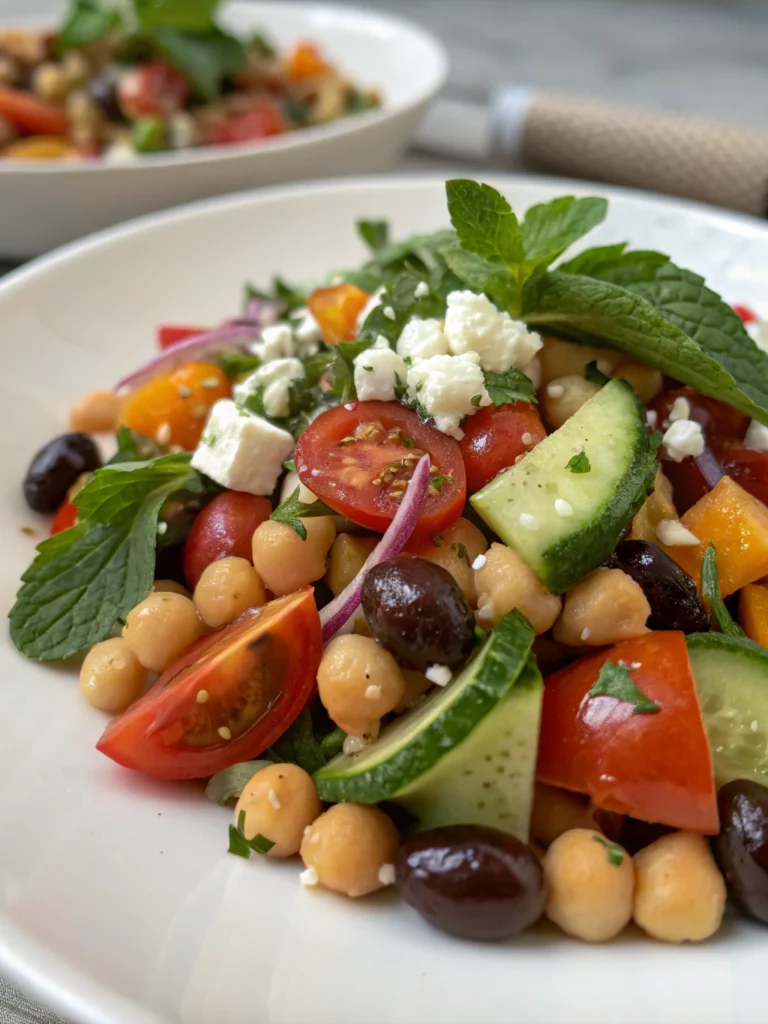
Mediterranean Twist: Replace Italian seasoning with za’atar, add chickpeas instead of ground turkey, and incorporate roasted red peppers and artichoke hearts. Drizzle with tahini sauce for authentic Mediterranean flavors.
Anti-Inflammatory Boost: Add turmeric and ginger to the grain cooking water, incorporate leafy greens like spinach in the final minutes of vegetable roasting, and top bowls with omega-3-rich walnuts or flaxseed.
Budget-Friendly Version: Use chicken thighs instead of breasts (often 30% cheaper with more flavor), frozen vegetable medleys instead of fresh, and white rice instead of brown. The nutritional profile remains strong while reducing costs significantly.
Serving Suggestions
Power Breakfast Bowl: Reheat one portion and top with a fried egg and hot sauce for a protein-packed breakfast that fuels your morning. The combination of complex carbs and protein stabilizes blood sugar for sustained energy.
Office Lunch Transformation: Add fresh greens, avocado slices, and a squeeze of lime just before eating to brighten flavors and add healthy fats. Pack dressing separately in small containers to prevent sogginess.
Quick Dinner Enhancement: Transform your prepped components into entirely different meals: use the chicken in tacos with fresh cilantro and salsa, toss the pasta with pesto and grilled vegetables, or create a Buddha bowl with added pickled vegetables.
Post-Workout Refuel: These easy meal prep for beginners bowls provide the ideal 3:1 carb-to-protein ratio for muscle recovery when consumed within 45 minutes of exercise.
Family-Style Serving: Arrange all components in serving dishes, allowing family members to customize their bowls with preferred toppings like shredded cheese, Greek yogurt, salsa, or fresh herbs.
Common Mistakes to Avoid
Overcrowding Baking Sheets: Vegetables need space to roast rather than steam. Overcrowding creates soggy, pale vegetables instead of caramelized perfection. Use two sheets or roast in batches if necessary.
Skipping the Resting Period: Cutting chicken immediately after baking releases all the juices, resulting in dry meat. The 5-minute rest redistributes moisture for tender, juicy results.
Using Containers Too Soon: Placing hot food directly into sealed containers creates condensation, leading to soggy meals and potential bacterial growth. Cool food to room temperature first, or leave lids slightly ajar until fully cooled.
Ignoring Protein Size Variations: Chicken breasts vary significantly in thickness. Pound thick portions to even thickness or slice larger breasts horizontally to ensure even cooking within the 20-minute timeframe.
Reheating Everything Together: Some components reheat better separately. Rice can dry out, so add a splash of water before microwaving. Vegetables stay crispier when reheated separately at high heat for 1-2 minutes.
Forgetting to Label Containers: Weekly meal prep ideas work best when you track preparation dates. Food safety guidelines recommend consuming refrigerated meal prep within 4-5 days.
Storing Tips for the Recipe
Refrigeration Best Practices: Store completed meal prep containers in the refrigerator at 40°F or below. Position containers on shelves rather than in door compartments where temperature fluctuates. These make ahead meals maintain optimal quality for 4-5 days.
Freezer Extension: Freeze individual portions in airtight containers for up to 3 months. Label with contents and date, then thaw overnight in the refrigerator before reheating. Rice and roasted vegetables freeze particularly well, though texture may slightly change.
Component Separation: Store sauces, dressings, and wet ingredients separately from other components to maintain texture integrity. Add these just before eating to prevent sogginess.
Glass vs. Plastic Containers: Glass containers don’t absorb odors or stains, reheat more evenly, and are more environmentally sustainable. BPA-free plastic works well for transport but may retain odors over time.
Raw Ingredient Prep: Alternatively, prep all raw ingredients Sunday and cook smaller batches throughout the week. This approach maintains maximum freshness while still saving substantial daily time.
Strategic Freezing: Freeze half your prepared meals if you prefer more variety. Alternate between fresh and frozen meals throughout the week to prevent meal prep fatigue.
Conclusion
This 30 minute meal prep strategy proves that healthy eating doesn’t require hours of Sunday cooking or culinary expertise. By implementing this systematic approach to batch cooking recipes, you’ll reclaim valuable weeknight hours, reduce food waste, eliminate decision fatigue, and maintain consistent nutrition throughout your busy week. The beauty of this method lies in its flexibility—once you master the basic framework, you can endlessly customize proteins, vegetables, and seasonings to match your preferences and dietary needs. Ready to transform your week? Set aside just 30 minutes this Sunday, follow these simple steps, and experience the life-changing benefits of strategic meal preparation. Share your meal prep creations and tag us with your favorite combinations—we love seeing how you make this system work for your unique lifestyle!
FAQs
Can I really complete meal prep in just 30 minutes?
Yes! The key is simultaneous cooking using multiple appliances—oven, stovetop, and rice cooker working at once. With everything diced and ready before you start cooking, the actual active time is minimal while appliances do the work.
How long do these meals stay fresh in the refrigerator?
Properly stored in airtight containers at 40°F or below, these meals maintain optimal quality and safety for 4-5 days. To extend freshness, freeze half the portions and thaw as needed throughout the week.
What if I don’t have a rice cooker?
A regular pot with a tight-fitting lid works perfectly. Bring water to a boil, add rice, reduce to the lowest heat setting, cover, and cook for 20 minutes without lifting the lid. The results are identical to rice cooker preparation.
Can I use different proteins or make this vegetarian?
Absolutely! This framework adapts to any protein: salmon, pork tenderloin, shrimp, tofu, tempeh, or legumes. Adjust cooking times based on protein choice—fish cooks faster (12-15 minutes) while plant proteins may need extra seasoning for flavor depth.
What’s the best way to reheat these meals?
Microwave individual portions for 2-3 minutes, stirring halfway through. Add a tablespoon of water to rice to prevent drying. For best texture, reheat vegetables separately on high heat for 1-2 minutes to maintain some crispness.
How can I add variety so I don’t get bored eating the same meals?
Prepare the base components using this method, then transform them throughout the week: Monday’s bowl becomes Tuesday’s wrap, Wednesday’s salad topping, Thursday’s quesadilla filling, and Friday’s fried rice. Different sauces and seasonings create entirely new flavor profiles from identical ingredients.
Is meal prep cost-effective compared to buying lunch daily?
Significantly! This meal prep costs approximately $3-4 per serving compared to $10-15 for restaurant meals. With 5 lunches prepared, you’ll save $35-55 weekly, totaling $1,820-2,860 annually while controlling ingredients and nutrition.
Can beginners really succeed with this system?
This is specifically designed as easy meal prep for beginners! The straightforward techniques require no advanced cooking skills—just basic chopping, seasoning, and monitoring timers. After 2-3 weeks, the process becomes second nature and even faster.