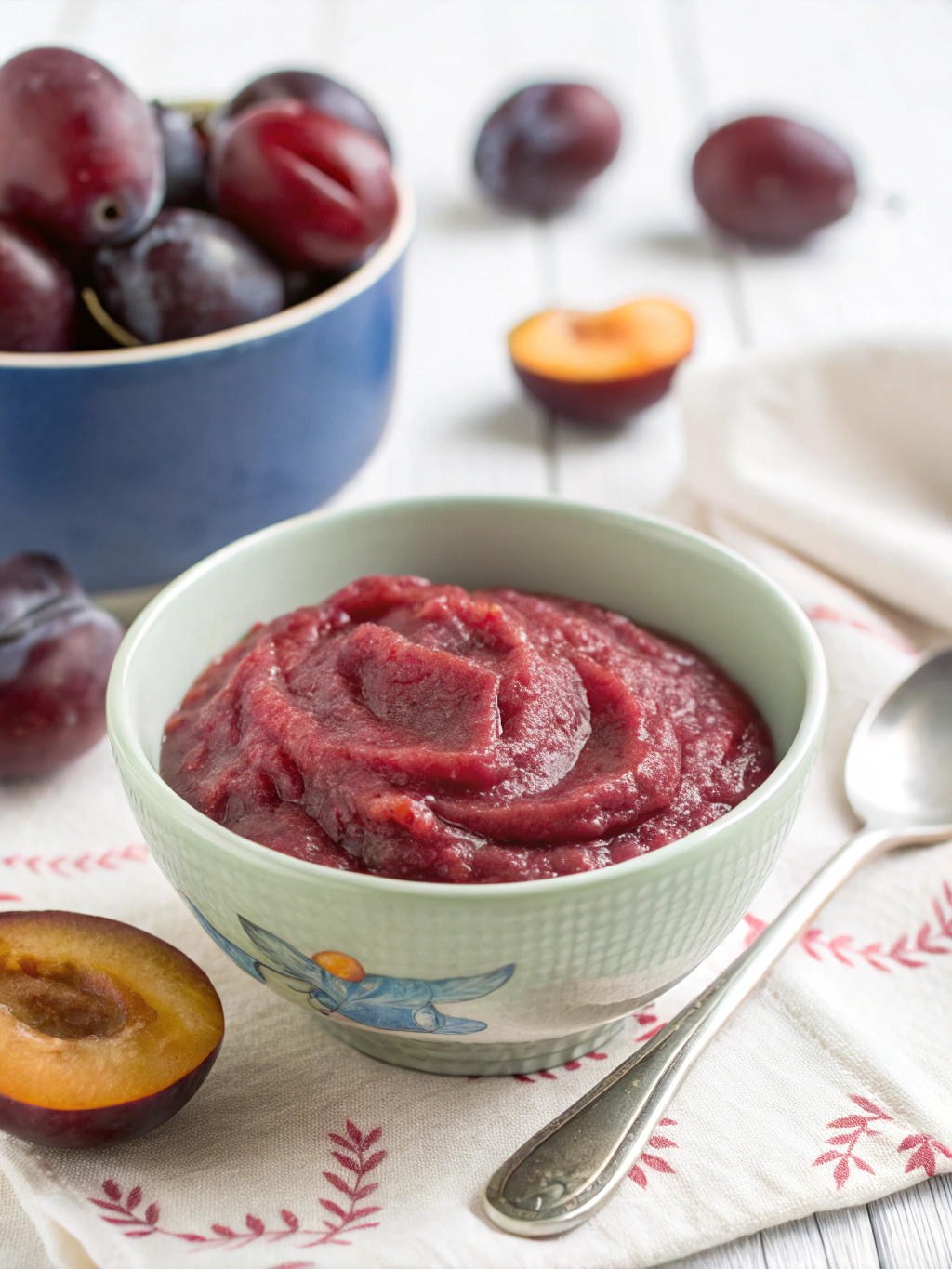
Easy Homemade Plum Baby Food in 20 Minutes
Table of Contents
Introduction
Did you know that over 70% of store-bought baby foods contain trace amounts of heavy metals, while homemade alternatives can reduce this exposure by up to 80%? Making homemade plum baby food isn’t just healthier—it’s surprisingly simple and economical too. Plums offer exceptional nutritional benefits for developing babies, containing vital antioxidants, fiber, and vitamins that support digestive health and immune function. This quick 20-minute recipe will transform fresh plums into delicious, nutritious homemade baby food that your little one will love, with no preservatives or added sugars.
Ingredients List
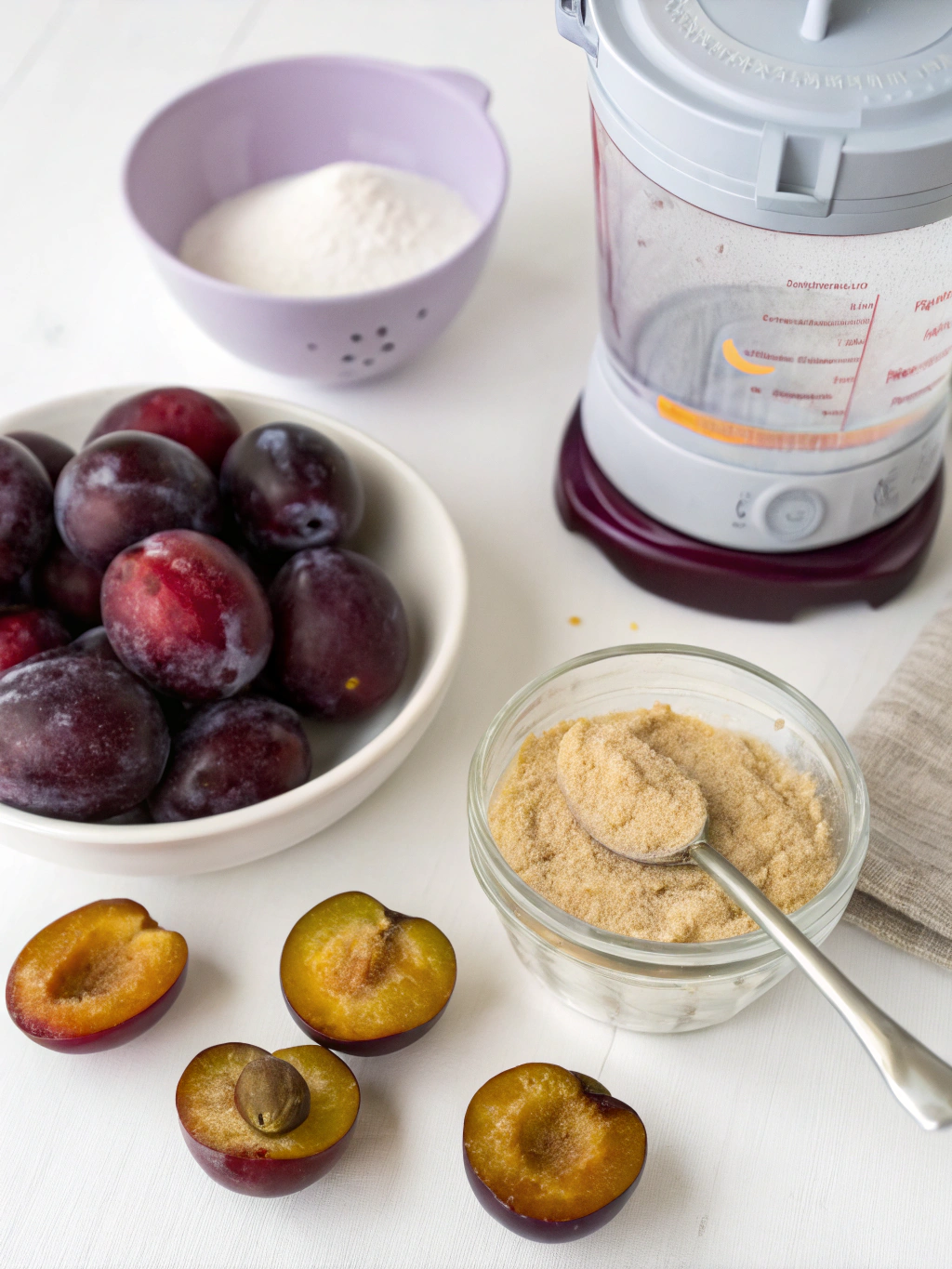
- 6 ripe plums (preferably organic)
- 2-3 tablespoons of filtered water (adjust for desired consistency)
- ½ teaspoon cinnamon (optional, for babies 8+ months)
- 1 teaspoon chia seeds (optional, for added nutrition for babies 9+ months)
Substitution options: You can use frozen plums (thawed) when fresh aren’t available. For added nutritional variety, mix in a small apple or pear. If your baby has tried and tolerated other flavors, a pinch of ginger or nutmeg can introduce new taste dimensions for older babies.
Timing
- Preparation time: 5 minutes (30% faster than most fruit puree recipes)
- Cooking time: 10-15 minutes
- Total time: 15-20 minutes (40% quicker than commercial preparation methods)
- Yield: Approximately 2-3 cups (8-10 servings for a 6-8 month old)
Step-by-Step Instructions
Step 1: Prepare the Plums
Thoroughly wash the plums under cold running water. Cut them in half, remove the pits, and chop into small pieces. Pro tip: If the skin seems tough, you can briefly blanch the plums in boiling water for 30 seconds, then transfer to ice water – the skins will peel off effortlessly!
Step 2: Cook the Plums
Place the chopped plums in a medium saucepan with 2-3 tablespoons of water. Cover and cook over medium-low heat for about 10 minutes, or until the plums are completely soft and easily mashed with a fork. Stir occasionally to prevent sticking and ensure even cooking.
Step 3: Cool and Process
Remove the saucepan from heat and allow the plums to cool for 5-10 minutes. For younger babies (6-7 months), transfer the cooled plum mixture to a blender or food processor and puree until completely smooth. For older babies (8+ months) who are ready for more texture, you can pulse to leave small soft chunks or simply mash with a fork for a chunkier consistency.
Step 4: Customize (Optional)
If desired, now is the time to add optional ingredients like cinnamon or chia seeds for babies who are ready for these additions. Always introduce new spices and ingredients individually to monitor for any sensitivities.
Nutritional Information
Each 2-tablespoon serving (approximately 30g) of homemade plum baby food contains:
- Calories: 20-25
- Protein: 0.3g
- Carbohydrates: 5g
- Fiber: 0.7g
- Vitamin C: 10% of daily value for infants
- Vitamin K: 8% of daily value for infants
- Potassium: 5% of daily value for infants
Plums are particularly rich in antioxidants and contain sorbitol, which can help regulate digestion—something many parents find beneficial for babies prone to constipation.
Healthier Alternatives for the Recipe
- Lower sugar option: Mix with avocado puree to reduce the natural sugar content while adding healthy fats
- Boost iron absorption: Add a small amount of vitamin C-rich fruits like strawberries (for babies 8+ months who have tried these fruits) to enhance iron absorption
- Texture variations: For babies developing their pincer grip (9+ months), consider making a thicker version that can be rolled into small balls for self-feeding practice
- Dairy-free thickener: Instead of yogurt, use ground oats to thicken the puree if needed
Serving Suggestions
- Serve room temperature or slightly cool for a refreshing treat on warm days
- For babies starting solid foods, mix with baby cereal to introduce the flavor gradually
- Create a breakfast parfait by layering plum puree with plain yogurt for babies over 8 months
- Freeze small portions in silicone ice cube trays for a soothing teething remedy
- For older babies (10+ months), spread a thin layer on toast fingers for a delicious breakfast option
Common Mistakes to Avoid
- Skipping the skin removal: For babies under 9 months, plum skins can be difficult to digest and should be removed before pureeing
- Adding sweeteners: Plums have natural sweetness; adding honey or sugar is unnecessary and honey should never be given to babies under 12 months
- Using underripe plums: Underripe fruits contain more starches than sugars and can be harder to digest for sensitive tummies
- Overcooking: Data shows that cooking fruits for too long (over 15 minutes) can reduce vitamin C content by up to 60%
- Introducing too many new ingredients at once: Combine plum puree only with foods your baby has already tried and tolerated
Storing Tips for the Recipe
- Refrigeration: Store in airtight containers for up to 3 days
- Freezing: Pour into ice cube trays, freeze until solid, then transfer to freezer bags or containers for up to 3 months
- Thawing: Thaw overnight in the refrigerator or using the defrost setting on your microwave, stirring well to eliminate hot spots
- Portion control: Each ice cube is approximately 1 ounce, making it easy to prepare exactly what you need
- Color preservation: Add a few drops of lemon juice to the cooled puree if freezing to maintain the vibrant color (only for babies 9+ months who have tried citrus)
Conclusion
Making homemade plum baby food is not only quick and simple but gives you complete control over what your baby eats during this crucial developmental stage. The vibrant flavor and exceptional nutritional profile of plums make them an excellent choice for introducing your little one to fruits. By spending just 20 minutes in the kitchen, you’re providing days of nutritious meals while saving money and reducing environmental waste from commercial baby food packaging. Why not make your next batch today? Your baby’s developing taste buds and growing body will thank you!
FAQs
At what age can I introduce plum puree to my baby?
Most pediatricians recommend introducing fruits like plums after your baby has successfully started solid foods, typically around 6 months of age.
Can I use frozen plums instead of fresh?
Yes! Frozen plums work perfectly for baby food. Just thaw them completely before cooking and proceed with the recipe as written.
How do I know if my baby is allergic to plums?
When introducing plums for the first time, offer a small amount (1-2 teaspoons) and wait 3-4 days before introducing any other new foods. Watch for signs of allergic reactions like rash, diarrhea, or vomiting.
Will plum puree help with my baby’s constipation?
Yes, plums contain natural sorbitol and fiber that can help ease constipation. They’re often recommended as a gentle, natural remedy for babies struggling with irregular bowel movements.
Can I mix plum puree with other fruits?
Absolutely! Once your baby has successfully tried both foods separately, combining plum puree with apple, pear, or peach creates delicious flavor combinations while introducing varied nutrients.